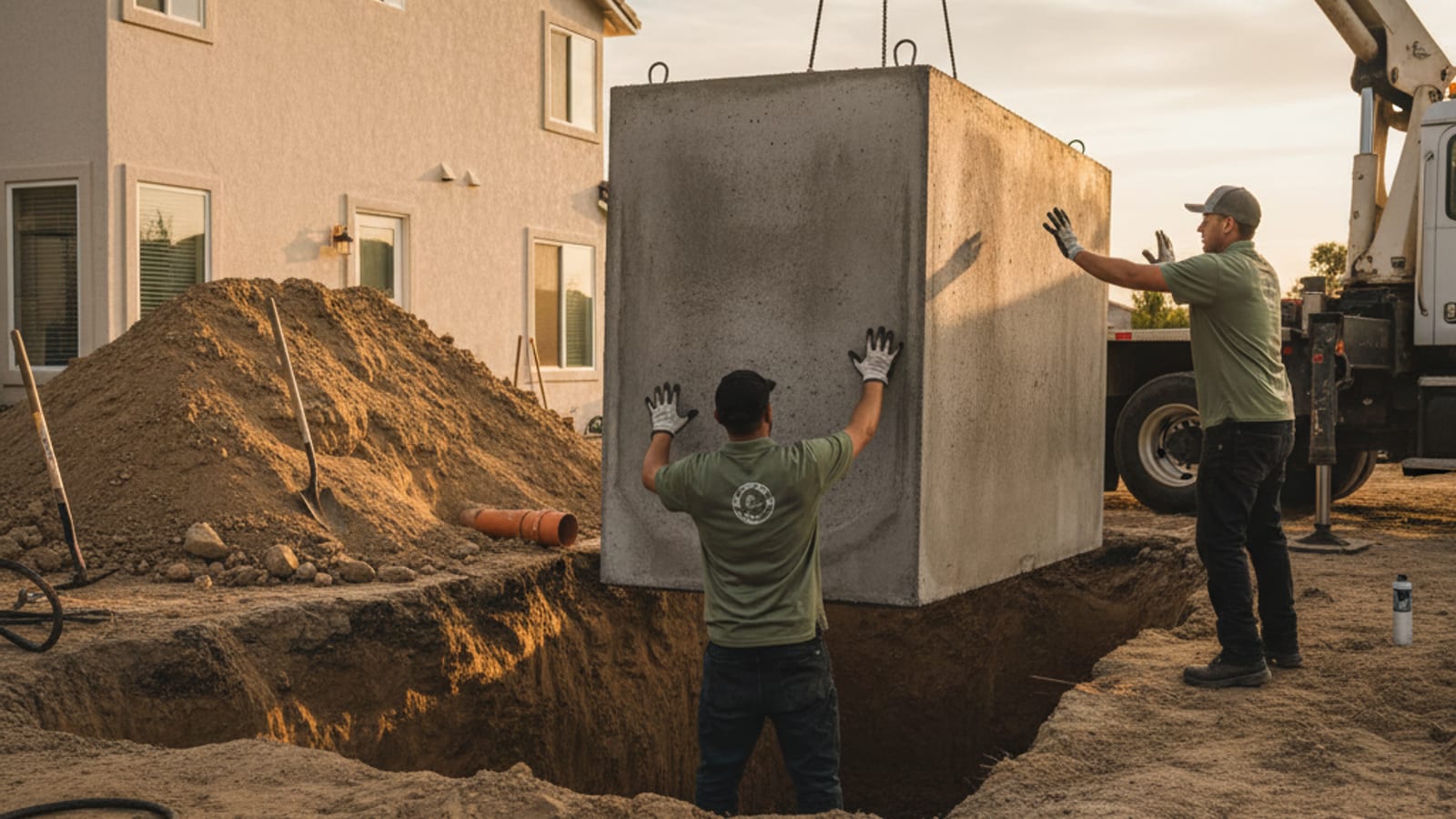
An alternative septic system is anything beyond a standard tank-and-gravel-drain-field setup. In San Diego County, the backcountry forces these systems often. Slow soil near Julian, shallow bedrock in Alpine, or a high water table in Valley Center can all fail a standard percolation test. When that happens, the county Department of Environmental Health (DEH) requires an engineered alternative. Here’s what each type is, what it costs, and what the county actually approves.
Why backcountry San Diego needs alternatives
A conventional system depends on one thing: soil that drains at the right speed. Not too fast, not too slow. The county measures this with a percolation test and a soil profile pit during the permit process.
Large parts of East County and the backcountry fail that test. Here’s why.
- Decomposed granite and shallow bedrock near Julian, Pine Valley, and parts of Alpine sit close to the surface. There isn’t enough usable soil depth for a standard drain field.
- Expansive clay soils in Ramona and Jamul drain too slowly. Effluent can’t move, so it surfaces.
- Steep slopes across the backcountry make standard trench layouts impossible to grade.
- Seasonal high water tables in Valley Center and Fallbrook lowlands push groundwater up near the drain field, which the county won’t allow.
When your site hits any of these, DEH won’t permit a conventional system. You move to an alternative. This isn’t an upsell. It’s a code requirement tied to your soil and parcel.
The system types San Diego County permits
The county’s Onsite Wastewater Treatment System (OWTS) rules recognize several alternatives. The right one depends on your soil class, lot size, slope, and how close you are to a well or stream.
Chamber system
Replaces the gravel in a standard drain field with open-bottom plastic chambers. Same idea as conventional, but it handles tighter sites and slightly slower soil better. The simplest step up from standard.
Used when: soil is borderline but not failing, or gravel hauling to a remote backcountry lot is too expensive.
Aerobic treatment unit (ATU)
The closest thing to a mini sewage plant on your property. It pumps oxygen into the tank, so bacteria break down waste far more completely before it reaches the drain field. Cleaner effluent means a smaller dispersal area.
Used when: the lot is small, soil is poor, or you’re near a well, stream, or other sensitive water. Common requirement near the San Diego River watershed and reservoir buffer zones.
The catch: an ATU has moving parts and needs a service contract. The county requires ongoing maintenance reporting for most engineered units.
Mound system
Builds an engineered sand mound above the native ground. Effluent gets pumped up into the mound, treated through the sand, then released into the soil below. It creates drain-field capacity where the natural soil has none.
Used when: bedrock or groundwater sits too close to the surface. This is the classic Julian and Pine Valley answer to shallow decomposed granite.
Recirculating sand filter
Effluent passes through a lined sand bed, sometimes more than once, before reaching the drain field. Produces very clean water. Used on the tightest, most sensitive sites.
Used when: you’re close to a stream, reservoir, or well and need a high level of treatment that an ATU alone won’t reach.
Drip distribution
Shallow drip tubing, like a buried irrigation system, spreads treated effluent across a wide area just below the surface. It needs a dose tank and a pump, and it pairs well with an ATU.
Used when: the site is shaped oddly, sloped, or the usable soil is shallow but spread out.
We don’t pick the system. Your soil engineer and DEH do, based on the percolation results and site plan. Our job is installing it right and getting it through county inspection.
What alternative systems cost in San Diego County
These ranges reflect installed cost in San Diego County, including the engineered design and county permitting most alternatives require. Backcountry access, slope, and hauling distance push the higher end.
| System type | Installed cost range | Notes |
|---|---|---|
| Chamber | $6,000 to $14,000 | Closest to conventional pricing |
| Drip distribution | $9,000 to $20,000 | Needs dose tank and pump |
| Recirculating sand filter | $10,000 to $25,000 | High treatment, sensitive sites |
| Mound | $12,000 to $35,000 | Common in shallow-soil backcountry |
| Aerobic treatment unit (ATU) | $13,000 to $30,000 | Plus an ongoing service contract |
A conventional system, by comparison, runs roughly $7,000 to $20,000 installed in the county. Alternatives cost more because they add engineering, pumps, and in some cases lifetime maintenance. For a full breakdown of standard pricing, see our septic system cost guide for San Diego.
Two cost drivers people miss:
- Engineered design. Alternatives need a licensed engineer’s plan before DEH will review. That’s a real line item, often $1,500 to $4,000 on its own.
- Maintenance contracts. ATUs and most engineered units require ongoing service and reporting to the county. Budget for that every year, not just at install.
The county DEH permit path for an alternative
The permit process is longer than a standard install because the county reviews an engineered design, not a template.
- Soil and percolation testing. A pit gets dug, the soil profile logged, and perc rates measured. This result decides everything.
- Engineered design. If the site fails conventional standards, a licensed engineer designs the alternative and sizes it to your bedroom count and soil.
- DEH plan review. The county reviews the design against OWTS rules. Expect 3 to 8 weeks, longer in summer.
- Installation. The actual dig and set is usually 2 to 5 days depending on system type.
- County inspection and sign-off. DEH inspects before backfill, then signs off.
For the full permit walkthrough, including fees and what triggers a new permit, read our San Diego septic permit guide.
Frequently asked questions
How do I know if I need an alternative system?
Your percolation test decides it. If your soil drains too slow or too fast, or bedrock and groundwater sit too close to the surface, the county won’t permit a conventional system. The soil pit result, not your preference, sets the path.
Are alternative systems worth it, or should I just connect to sewer?
In most backcountry San Diego parcels, sewer isn’t an option. There’s no main to connect to for miles. If you’re in a fringe area where sewer is nearby, it’s worth comparing. We break that down in our septic vs. sewer guide for San Diego.
Do alternative systems need more maintenance?
Yes, usually. ATUs, sand filters, and drip systems have pumps, controls, or service contracts the county tracks. A conventional system just needs regular pumping. Factor the annual service cost into your decision.
Can I replace a failed conventional drain field with an alternative?
Often, yes. When a drain field fails on a tight or poor-soil lot, an alternative may be the only path to re-permit. See our guide on drain field repair versus replacement for how that decision works.
How long do alternative systems last?
The tank and dispersal field can last 25 to 40 years with care. Pumps and aerators on ATUs and drip systems wear out sooner, often every 5 to 10 years, and get replaced as part of routine service.
Will an alternative system fit my small or sloped lot?
That’s exactly what they’re for. Mounds work on shallow soil, drip handles odd shapes and slopes, and ATUs shrink the dispersal area needed. The engineer designs around your parcel.
Talk through your options before you commit
Alternative systems are a bigger decision than a standard install. The right choice depends on your soil results, your lot, and the county’s read on both. We give upfront quotes, cover the whole county including the backcountry, and work the DEH permit process every week.
Call us at (858) 925-5546 to talk through what your site likely needs. We’ll be straight with you about cost and timeline before any work starts.