If your lot has poor soil, a shallow water table, or sits near a sensitive waterway, a conventional septic tank may not meet San Diego County’s permitting requirements. That’s where an aerobic septic system comes in. It treats wastewater more thoroughly, but it costs more to install and more to operate, so it’s worth understanding before you commit.
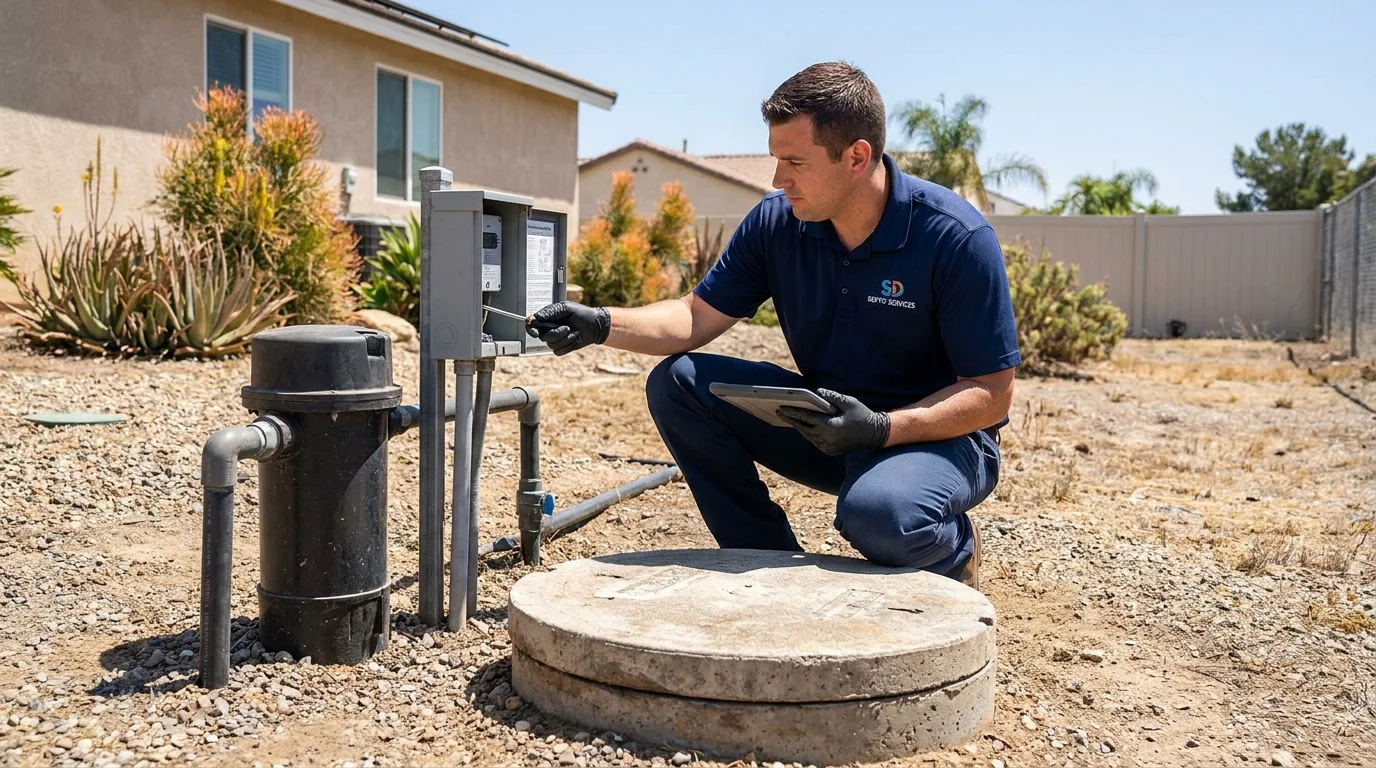
What is an aerobic septic system?
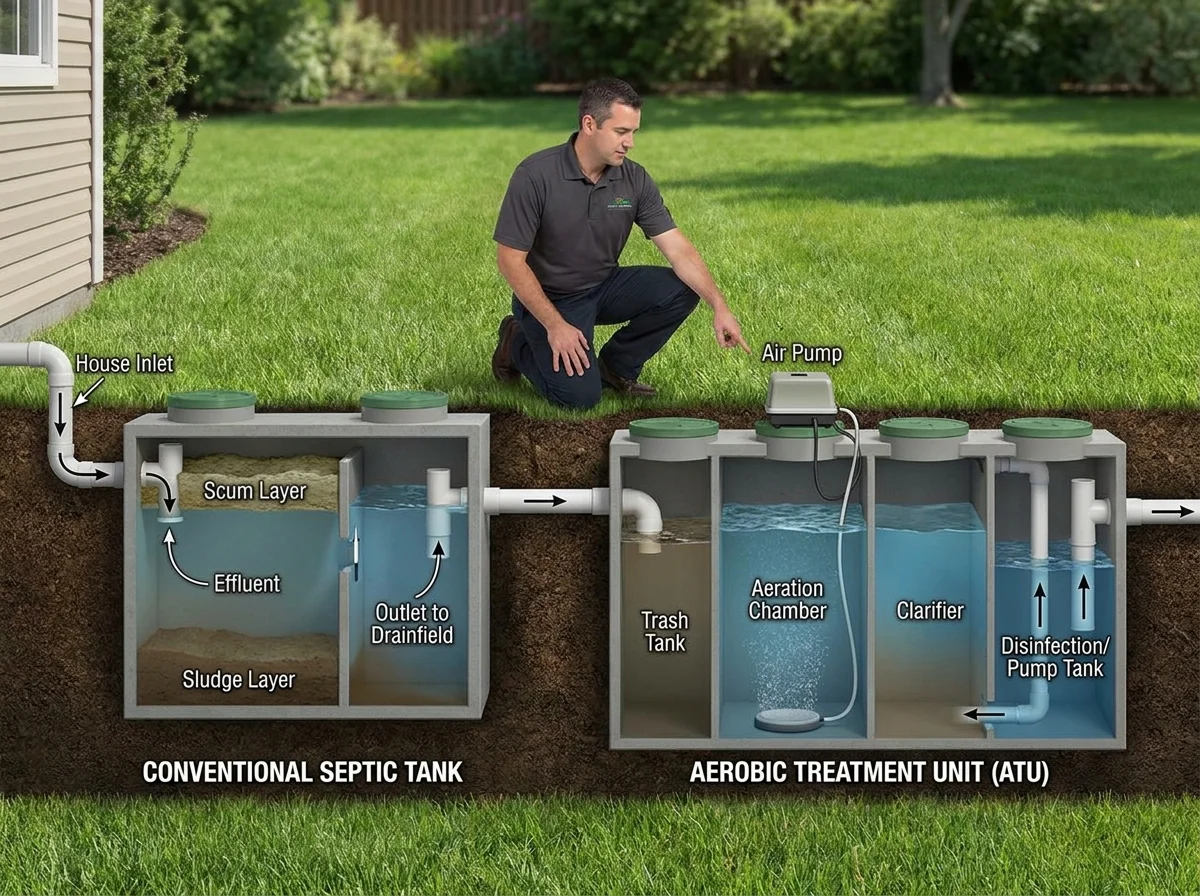
A conventional septic tank is an anaerobic system. Bacteria break down waste in an oxygen-free environment, then partially treated effluent flows to a drain field. It works well on lots with deep, well-draining soil and plenty of room for a leach field.
An aerobic septic system, often called an aerobic treatment unit (ATU), adds oxygen to the process. An electric air pump continuously injects air into a treatment chamber. That oxygen feeds aerobic bacteria, which are far more aggressive at breaking down organic matter than their anaerobic cousins. The result is effluent that’s significantly cleaner before it ever reaches the soil.
Most ATUs produce effluent that’s 85-95% treated, compared to roughly 40-50% for a standard septic tank. That cleaner output is why county and state regulators often require an ATU when site conditions make a conventional system risky.
The US EPA’s SepticSmart program classifies aerobic systems as advanced treatment technology, and California’s statewide OWTS Policy (overseen by the California Water Boards) allows them as an alternative when a standard system can’t meet performance thresholds.
Aerobic vs. conventional (anaerobic) systems
The core difference is the treatment process. Conventional systems rely on a two-stage setup: a septic tank for primary settling and anaerobic digestion, then a drain field for secondary treatment through soil filtration. That works fine when soil conditions are favorable.
ATUs add a third stage. Most three-compartment ATUs move wastewater through:
- A trash chamber, where solids settle out just like a conventional tank
- An aeration chamber, where the air pump keeps aerobic bacteria active
- A clarification chamber, where treated water separates before it’s discharged
Some ATUs include a fourth stage for disinfection, using chlorine tablets or UV light. That final step brings the effluent to near-surface-water quality.
The tradeoff is complexity. More components mean more things that can break. The air pump runs continuously, which adds to your electric bill. Most manufacturers require quarterly service visits from a licensed technician to check the pump, clean components, and refill disinfectant. Conventional systems typically need professional attention only at pump-out time, roughly every 3-5 years.
For a deeper look at the full range of alternatives, see our guide to alternative septic systems in San Diego.
When San Diego County properties need one
San Diego County’s Department of Environmental Health issues OWTS (onsite wastewater treatment system) permits under Title 6 of the County Code. Not every property qualifies for a conventional gravity system. An ATU is often required when:
- Poor percolation. If your soil doesn’t drain well enough to pass a perc test, a conventional drain field won’t work. ATUs produce cleaner effluent that many marginal soils can handle.
- High water table. Properties in valley bottoms or near the coast can have seasonal water tables too shallow for a standard leach field. An ATU combined with a mound system or drip irrigation can solve this.
- Small lot size. If there’s not enough room for a conventional drain field and its required setbacks, an ATU’s smaller footprint (sometimes paired with drip dispersal) may fit.
- Environmentally sensitive areas. Properties near creeks, lagoons, or coastal areas in San Diego County often face stricter effluent quality requirements. The San Elijo Lagoon area, Tijuana River watershed, and parcels near Ramona’s seasonal waterways are common examples.
- Failed conventional system. If an existing drain field has failed and there’s no room for a new one in a suitable location, an ATU might be the only compliant path forward.
The San Diego County Department of Environmental Health reviews each permit application individually. What triggers an ATU requirement on one parcel may not apply to a neighboring lot with better soil conditions.
Components and how the treatment works
A typical residential ATU installed in San Diego County includes these main parts:
The air pump and blower
This is the heart of the system. It runs around the clock, pulling outside air and injecting it into the aeration chamber. Most residential units use a rotary vane or linear diaphragm pump rated at 2-6 cubic feet per minute. When the pump fails, the system reverts to anaerobic conditions and treatment quality drops. Good ATU control panels include an alarm that alerts you when the pump stops working.
Aeration chamber
Wastewater spends several hours in the aeration chamber. Aerobic bacteria colonize the water column and attached media (some systems use plastic media for additional surface area). They consume organic matter at a much faster rate than anaerobic bacteria, which is why ATUs produce cleaner effluent in a smaller footprint.
Clarification and disinfection
After aeration, water moves to a clarification zone where suspended solids settle. The clarified effluent then flows through a disinfection stage. Chlorine tablet feeders are most common in residential ATUs. Some newer units use UV disinfection, which avoids adding chemicals to the effluent.
Dispersal field
Despite producing cleaner water, an ATU still needs a dispersal field. Depending on soil conditions, that might be a conventional leach field, a drip irrigation system, or a mound system. The cleaner effluent often allows a smaller dispersal area, which matters on tight lots.
Maintenance and ongoing costs
This is where ATUs part ways with conventional systems. Honest cost expectations matter here.
Installation cost. A conventional septic system in San Diego County typically runs $8,000-$20,000 depending on system size, soil conditions, and permit fees. An ATU installation adds $5,000-$15,000 on top of that, mostly for the unit itself, the control panel, and additional labor. Full aerobic system installations often land in the $15,000-$35,000 range. For a broader breakdown of septic costs, see our septic system cost guide for San Diego.
Electricity. The air pump runs continuously. Most residential pumps draw 200-400 watts. At SDG&E’s current residential rates, that adds roughly $15-$35 per month to your electric bill.
Service contracts. California requires ATU owners to maintain a service contract with a licensed contractor. In San Diego County, most ATUs need quarterly inspections. Plan on $150-$300 per quarterly visit, or $600-$1,200 per year for routine maintenance alone.
Component replacement. Air pumps typically last 3-7 years. Replacement cost runs $300-$700 for the pump plus labor. Chlorine tablet feeders need regular refilling. Control panel components can fail and require electrician involvement.
Pump-outs. Like any septic system, ATUs still accumulate solids in the trash chamber. Most residential ATUs need pumping every 1-3 years, more frequently than some conventional tanks.
The ongoing costs are real. If your lot qualifies for a conventional system, the simpler option will almost always cost less over a 20-year period. But if an ATU is what your site requires, understanding those costs upfront prevents surprises.
Is it the right choice for your lot?
The honest answer is that most San Diego County homeowners don’t choose an ATU. They’re required to install one based on site conditions or county permit requirements.
If you’re buying property in rural San Diego County (areas like Valley Center, Fallbrook, Ramona, or backcountry parcels near Alpine), check the existing permit records before closing. A property with an ATU has higher annual operating costs than one with a conventional system. If no septic system exists yet, a soil evaluation and perc test early in the process will tell you what you’re working with.
If you’re replacing a failed system, your options depend on what the current site will support. A licensed C-42 contractor can evaluate the soil, measure available space, and tell you what the county is likely to approve. That site evaluation is the first step before any permit application.
For septic system installation projects in San Diego County, we connect you with vetted C-42 licensed contractors who handle the permit application, design, installation, and can arrange the required service contract after commissioning. You can verify any contractor’s license at cslb.ca.gov before signing anything.
When to call us
If your property needs a new septic system, has a failing drain field, or you’re navigating a county permit that may require an ATU, a site evaluation is the right first step. We’ll tell you what your lot will support and what the permit process looks like before you spend anything. Call us at (858) 925-5546 for a same-day estimate.