Not every San Diego County property can support a standard buried drain field. Sometimes the soil is too shallow, too dense, or too wet. That’s when a mound septic system becomes the right answer. Understanding what one is, why you might need it, and what it costs can save you months of surprises during a build or sale.
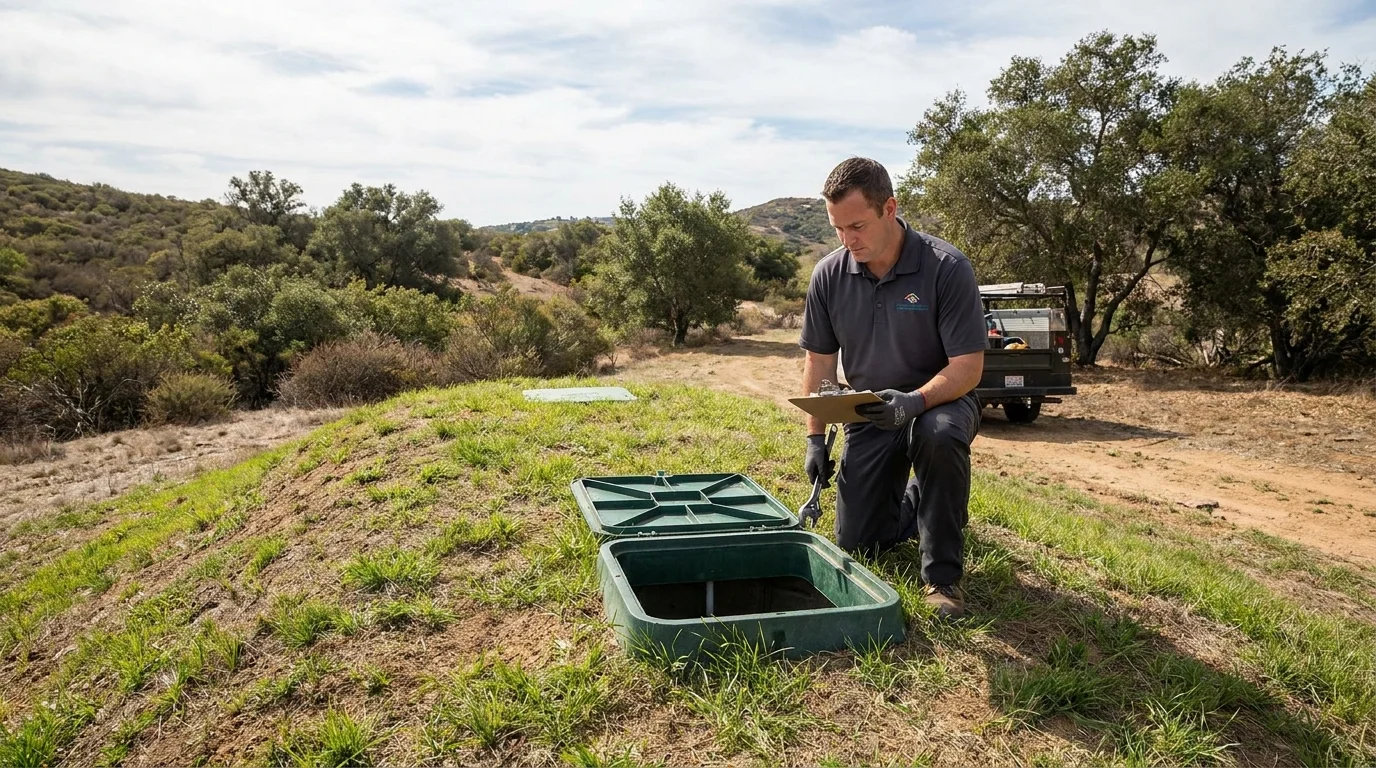
What is a mound septic system?
A mound system is a type of septic system where the drain field sits above the natural ground surface instead of below it. Engineers design them for sites where soil conditions make a conventional buried leach field impractical or prohibited.
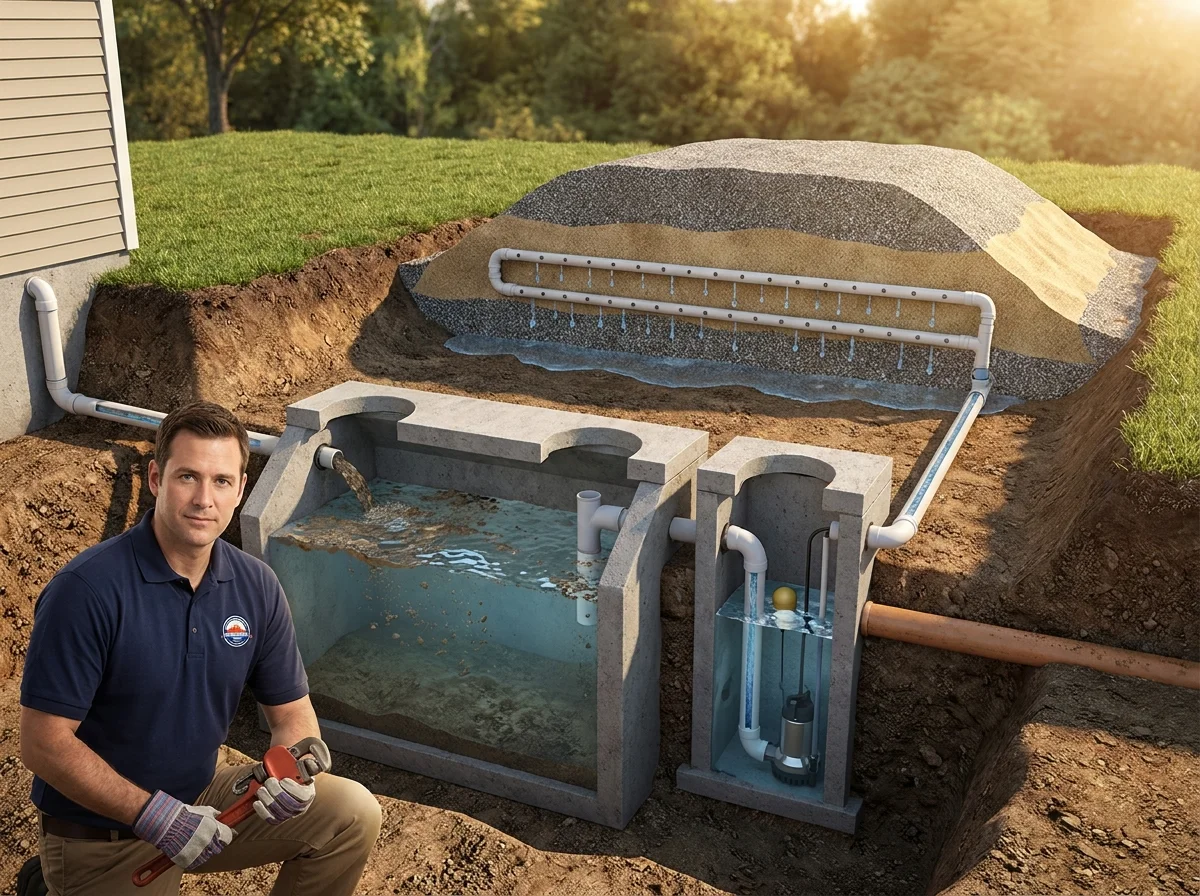
The system has three main parts. First, a standard septic tank receives wastewater from the house and separates solids from liquids. Second, a dosing chamber (also called a pump chamber) holds the clarified liquid and pumps it out in timed doses. Third, the mound itself: a raised bed of sand and gravel, typically 2-4 feet above grade, with a network of distribution pipes inside it. Wastewater gets dosed up into the sand, treated as it percolates through, and then filters into the native soil below.
The mound is what makes the system work. It creates the treatment depth and drainage the native site can’t provide on its own. Most mounds are 10-20 feet wide and can run 50-100 feet long, depending on daily flow and site conditions. They’re finished with topsoil and grass and, once established, blend into the landscape reasonably well.
Why some San Diego lots require a mound
San Diego County isn’t one soil type. The backcountry and east county foothills include parcels with thin, rocky soil profiles, high clay content, or seasonal water tables that rise closer to the surface than most people expect.
San Diego County’s Department of Environmental Health conducts soil percolation tests and site evaluations before approving any septic system design. When a standard percolation test fails or when the site’s “limiting layer” (rock, clay, or seasonal high groundwater) is too shallow, a conventional system is off the table. A mound system is one of the approved alternatives under California’s OWTS (Onsite Wastewater Treatment System) Policy maintained by the California Water Boards.
Common triggers in San Diego County include:
- Shallow bedrock or hardpan clay less than 18 inches below grade
- Seasonal high groundwater within 24 inches of the surface
- Percolation rates that are too slow (more than 120 minutes per inch) or too fast (less than 1 minute per inch)
- Small lot size combined with setback requirements that eliminate conventional field space
If you’re buying rural property and the inspection flags any of these issues, a mound system may already be in the cards. A septic inspection before closing can clarify exactly what the site will support.
How a mound system treats wastewater
The treatment process in a mound system is straightforward, but the engineering behind it matters.
Wastewater flows from the house into the septic tank, where solids settle and scum floats. The clarified liquid in the middle layer (effluent) flows by gravity into the pump chamber. A float-controlled pump sends effluent to the mound in timed doses, usually several times per day, rather than in a continuous stream. Timed dosing prevents the sand bed from saturating and losing its treatment capacity.
Inside the mound, the effluent distributes through perforated pipes and drains down through 12-24 inches of sand. The sand acts as a filter and treatment zone. Aerobic bacteria in the sand break down organic matter and pathogens. After moving through the sand, the treated liquid reaches the native soil at the base of the mound and percolates into the ground.
That final percolation step is where the native soil conditions that disqualified a conventional system stop mattering as much. By the time liquid reaches the native layer, treatment is largely complete. The mound does the heavy lifting the native soil couldn’t.
Cost and space considerations
Mound systems cost more than conventional systems, and they take up more yard. That’s the honest answer, and it’s worth knowing before a site evaluation surprises you.
A conventional septic system in San Diego County typically runs $8,000-$15,000 for a standard three-bedroom home, depending on soil conditions and site access. A mound system usually adds $5,000-$15,000 on top of that, putting total installed costs in the $15,000-$30,000 range. Some complex sites with difficult access or premium engineered fill requirements can go higher. For a more detailed look at baseline installation costs, see our post on septic system cost in San Diego.
The footprint is the other consideration. A mound system for a three-bedroom home might require a raised area 15 feet wide by 60-80 feet long. Add setbacks from property lines, wells, and structures, and the effective land commitment can be significant. For smaller or irregularly shaped parcels, this is worth mapping carefully before committing to a design.
Permit fees from the San Diego County Department of Environmental Health apply on top of contractor costs. A C-42 licensed contractor (the California CSLB license class for sanitation system contractors) will pull the permit, handle required inspections, and coordinate with the county environmental health department.
The US EPA’s SepticSmart program offers homeowner guidance on system types and long-term costs that can help set expectations.
Maintenance and what can go wrong
A mound system has more moving parts than a gravity-fed conventional system, and that affects maintenance.
The pump in the dosing chamber is the most failure-prone component. Most pumps last 10-15 years with proper care. A failed pump means effluent can’t reach the mound and the system backs up. Many mound systems include an alarm float that alerts you when the pump chamber reaches a high-water level. If your alarm goes off, call a septic pro the same day. Don’t wait.
Beyond the pump, mound systems need:
- Regular septic tank pumping. Every 3-5 years for most households. Neglecting this lets solids carry over into the pump chamber and mound, clogging the sand bed over time. See how often pumping makes sense for different household sizes in our guide on how often to pump your septic tank.
- Annual inspection of the pump and floats. Confirm the pump cycles correctly and the alarm float is functional.
- Mound surface care. Keep the mound planted with grass or shallow-rooted ground cover. Deep roots from trees or shrubs can damage distribution pipes. Never drive vehicles over the mound.
- Water conservation. Mound systems are sized for a specific daily flow. Consistently exceeding that flow (through leaky toilets, extra laundry loads, or added occupants) can hydraulically overload the sand bed.
A septic maintenance plan that covers annual pump-and-float checks alongside scheduled tank pumping is the most cost-effective way to protect a mound system long-term.
Common failure modes include pump burnout, sand bed clogging from excessive solids carryover, distribution pipe blockages, and surface breakout (effluent seeping to the surface of the mound). Surface breakout is a health hazard and a permit violation. If you see wet spots or odors coming from the mound, stop using water and call for service immediately.
Is a mound system right for your property?
“Right” is usually the wrong frame. If the soil evaluation requires a mound, you don’t have a choice. A mound is the path to a permitted, code-compliant system on that site.
If you’re in the planning stage for a new build or evaluating a property, the question is really whether the site supports any conventional alternative first. Mound systems are more expensive to install and to maintain than gravity-fed systems. If the soil can support a conventional design, that’s typically the better path.
Where mound systems shine: they’re reliable, they have a strong track record in California, and they can serve a home for 20-30 years with proper care. The higher upfront cost is real, but for sites that need them, they work.
For properties where a mound system still isn’t the best fit (extreme access issues, very small footprints, or specific treatment requirements), there are other alternative septic systems in San Diego worth understanding. Options like aerobic treatment units or drip-irrigation systems can sometimes work on sites where even a mound is difficult.
If you’re moving forward with a septic system installation on a site that may need a mound, the county evaluation process will drive the design. Get the site evaluated early, before you finalize lot layouts or building plans.
When to call us
If your site evaluation has flagged a mound system requirement, or if you’re buying a property with an existing mound and want to understand its condition, the next step is a site evaluation with someone who knows San Diego County’s permit process. Call us at (858) 925-5546 for a same-day estimate.