Most septic problems that end up costing homeowners thousands of dollars were preventable. The system didn’t fail overnight. It failed because no one pumped it on time, or the drain field got compacted, or the wrong things went down the drain for years. The good news: septic maintenance is not complicated. It just has to happen.
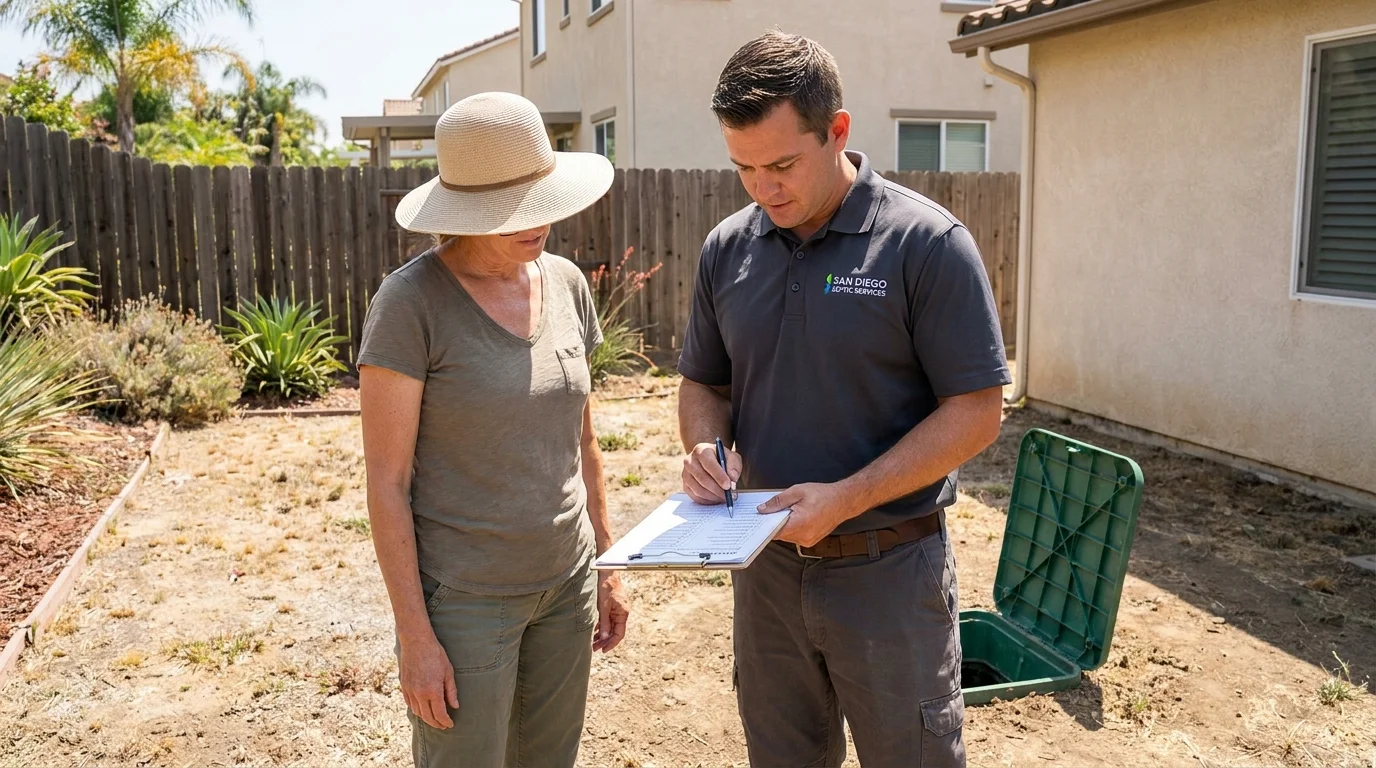
What does septic maintenance actually involve?
A septic system has two main parts: the tank and the drain field (also called a leach field). Both need attention, but in different ways.
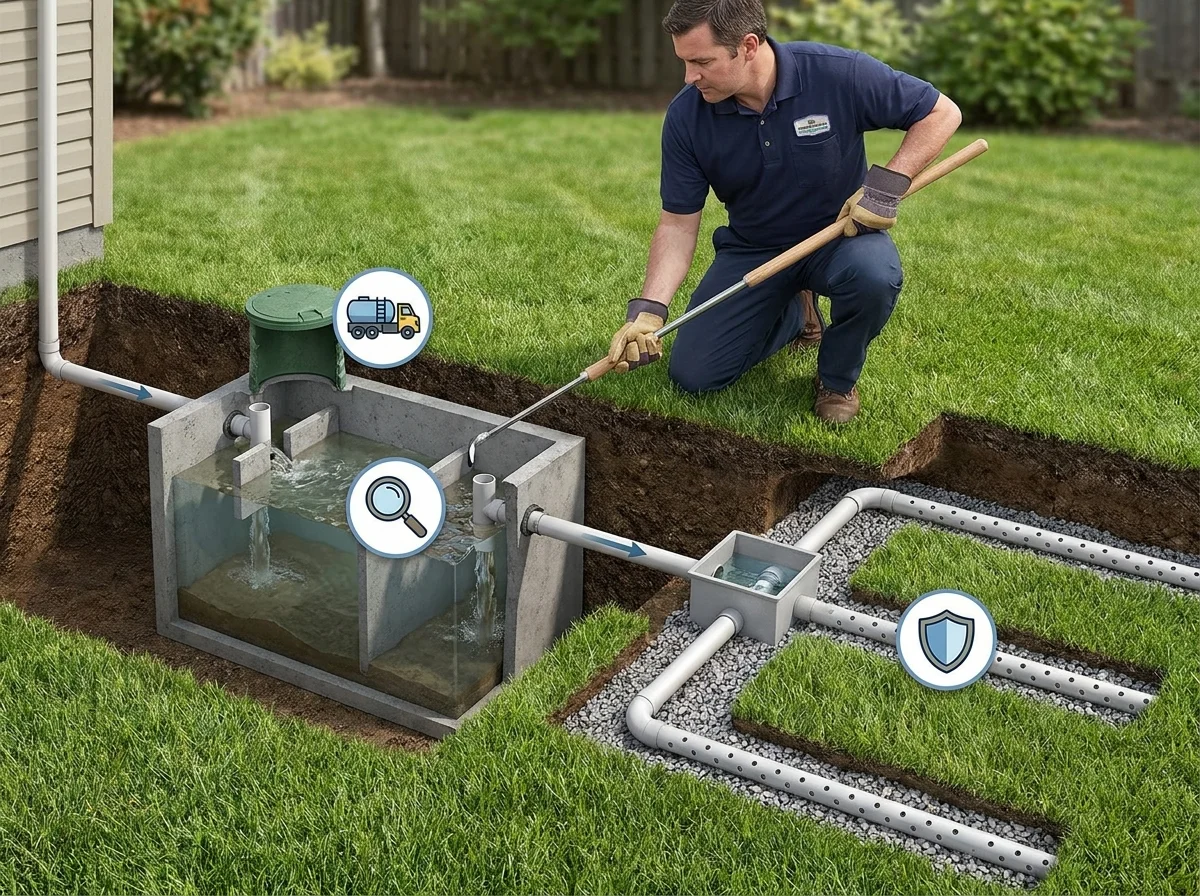
The tank is a buried concrete or fiberglass vessel. Wastewater flows in, solids sink to the bottom as sludge, grease floats to the top as scum, and the clarified liquid in the middle (effluent) exits toward the drain field. The tank doesn’t clean itself. Sludge and scum build up over time. When that layer gets too thick, solids start flowing out into the drain field and clogging it. That’s when you have a real problem.
The drain field is a network of perforated pipes buried in gravel trenches. Effluent seeps out slowly and gets filtered by the soil. The drain field can be damaged by physical compaction, flooding, or taking on more solids than it was designed to handle.
Routine septic maintenance covers both components: keeping the tank pumped and inspected, protecting the drain field from damage, and making sure the inlet and outlet baffles are intact so solids stay where they belong.
The US EPA’s SepticSmart program puts it simply: pump, inspect, protect, and conserve. Those four words cover about 90% of what homeowners need to do.
How often should each task be done?
Pumping is the most important task, and it’s also the most commonly skipped. Most residential tanks in San Diego County need to be pumped every 3-5 years. But that range varies a lot based on tank size and household size.
A 1,000-gallon tank serving a family of four typically needs pumping every 3 years. The same tank serving two people might go 5-6 years. A smaller tank, or a household that does a lot of laundry or runs a garbage disposal, might need pumping closer to every 2 years.
Our post on how often to pump your septic tank in San Diego goes deeper on this, with a simple table you can use to find your interval.
Beyond pumping, here’s a general schedule:
Every pump-out (every 3-5 years): Full inspection of tank, baffles, and risers. Check for cracks, root intrusion, or baffle damage. Inspect effluent filter if one is installed.
Annually: Walk the drain field area. Look for soft or wet spots, odors, or unusually lush green patches above the field. These are early warning signs.
Ongoing: Watch what goes down the drain. This is the maintenance task that never stops.
The DIY tasks vs. what needs a pro
Some maintenance is genuinely in your hands. Some of it is not.
What you can do yourself:
Protect the drain field from physical damage. Don’t park cars on it. Don’t plant trees or large shrubs nearby. Keep landscaping to shallow-rooted grass. In San Diego County, we have a lot of clay-heavy soil in areas like El Cajon, Lakeside, and Ramona. Clay doesn’t drain well. Compaction over clay is especially damaging to drain field performance.
Watch your water use. Sending too much water through the system too fast doesn’t give solids time to settle. Spread laundry loads across the week instead of doing six loads on Saturday. Fix leaky toilets. A running toilet can dump hundreds of gallons a day into your septic system.
Be strict about what goes down the drain. No wipes (even “flushable” ones), no feminine hygiene products, no paper towels, no medications, no grease, no harsh chemical cleaners. Bleach in small amounts is fine. Antibacterial soaps in regular quantities are fine. But high concentrations of chemicals kill the bacteria that make your tank work.
What needs a licensed pro:
Pumping, inspection, baffle replacement, effluent filter cleaning, and anything involving opening the tank or touching the drain field components. In California, septic contractors are licensed by the CSLB under Class C-42 (Sanitation System Contractor). Work done without a C-42 license isn’t just illegal. It can void your system’s coverage and cause problems if you ever sell.
San Diego County’s Department of Environmental Health requires permits for repairs, installations, and certain modifications. You can check permit requirements at the San Diego County DEH land use program page.
What shortens a septic system’s life in San Diego County?
San Diego’s geography and climate create some specific hazards for septic systems that don’t get enough attention.
Clay soil in the backcountry. Communities like Ramona, Valley Center, Fallbrook, and parts of Alpine sit on clay-heavy soils. Clay swells when wet and shrinks when dry. This cycle stresses drain field pipes over time. Clay also drains slowly, which can cause drain field saturation during heavy rain. If you’re in one of these areas, your system needs more careful monitoring and may need to be pumped more frequently.
Rainy-season runoff. San Diego’s dry summers and concentrated winter rains put specific stress on drain fields. When the soil around your drain field becomes saturated from surface runoff or a high water table, the effluent has nowhere to go. This can push sewage back toward the surface. Grading your yard so runoff flows away from the drain field is one of the most valuable things you can do during construction or landscaping.
Tree roots. Eucalyptus, willow, and citrus trees are common in San Diego yards. Their roots aggressively seek water. A drain field is a perfect target. Roots can penetrate pipe joints and crush laterals. Keep trees at least 30 feet from the drain field, and more for large species.
Septic additives. Products claiming to “supercharge” your tank bacteria or reduce pumping frequency are not supported by evidence. The EPA’s position is that properly functioning systems don’t need additives, and some products may actually harm your system. We wrote a full breakdown in our post on whether septic additives actually work. The short answer: skip them.
Garbage disposals. A garbage disposal adds significant solid load to your tank. If you have one, plan on pumping more frequently.
A simple year-round maintenance schedule
This is the checklist we give to homeowners after a service call. Print it out and tape it inside a cabinet.
Every month:
- Run only full loads in the dishwasher and washing machine
- Fix any leaky faucets or running toilets
- Don’t put grease, wipes, or medication down any drain
Every spring (after rainy season):
- Walk the drain field and look for wet spots, odors, or unusually green patches
- Check the area around the septic tank lid for any settling or cracking
- Make sure downspouts and surface water drain away from the system
Every 1-3 years:
- Have a licensed C-42 contractor inspect the system
- Check baffle condition and effluent filter (if installed)
Every 3-5 years (or per your calculated interval):
- Pump the septic tank
- Full inspection at time of pump-out
If you’re on a septic maintenance plan, your contractor tracks the intervals for you and sends reminders. For most homeowners, a maintenance plan is worth it. We looked at the real costs in this post: is a septic maintenance plan worth it.
When to call for service
Some things can wait for your next scheduled service. Some can’t.
Call a pro now if you notice sewage odors inside the house or in the yard above the drain field. Call if drains are backing up or gurgling. Call if you see wet or mushy ground over the drain field area, especially if it smells. These are signs the system is failing, not just overdue for maintenance.
If you’ve missed a pump-out cycle and aren’t sure of your tank’s status, schedule an inspection before the next wet season. A tank that’s 80% full going into a rainy winter is at high risk of backup or drain-field damage.
The California Water Boards OWTS Policy sets statewide standards for what constitutes a failing system. Counties like San Diego can be more strict. Don’t wait until there’s an enforcement issue.
When to call us
If your system is overdue for pumping, showing warning signs, or you’re not sure when it was last serviced, that’s the right time to call a licensed septic pro. Tank Pro SD connects you with vetted crews for pumping, inspections, baffle checks, and full system assessments across San Diego County.
Call us at (858) 925-5546 for a same-day estimate.