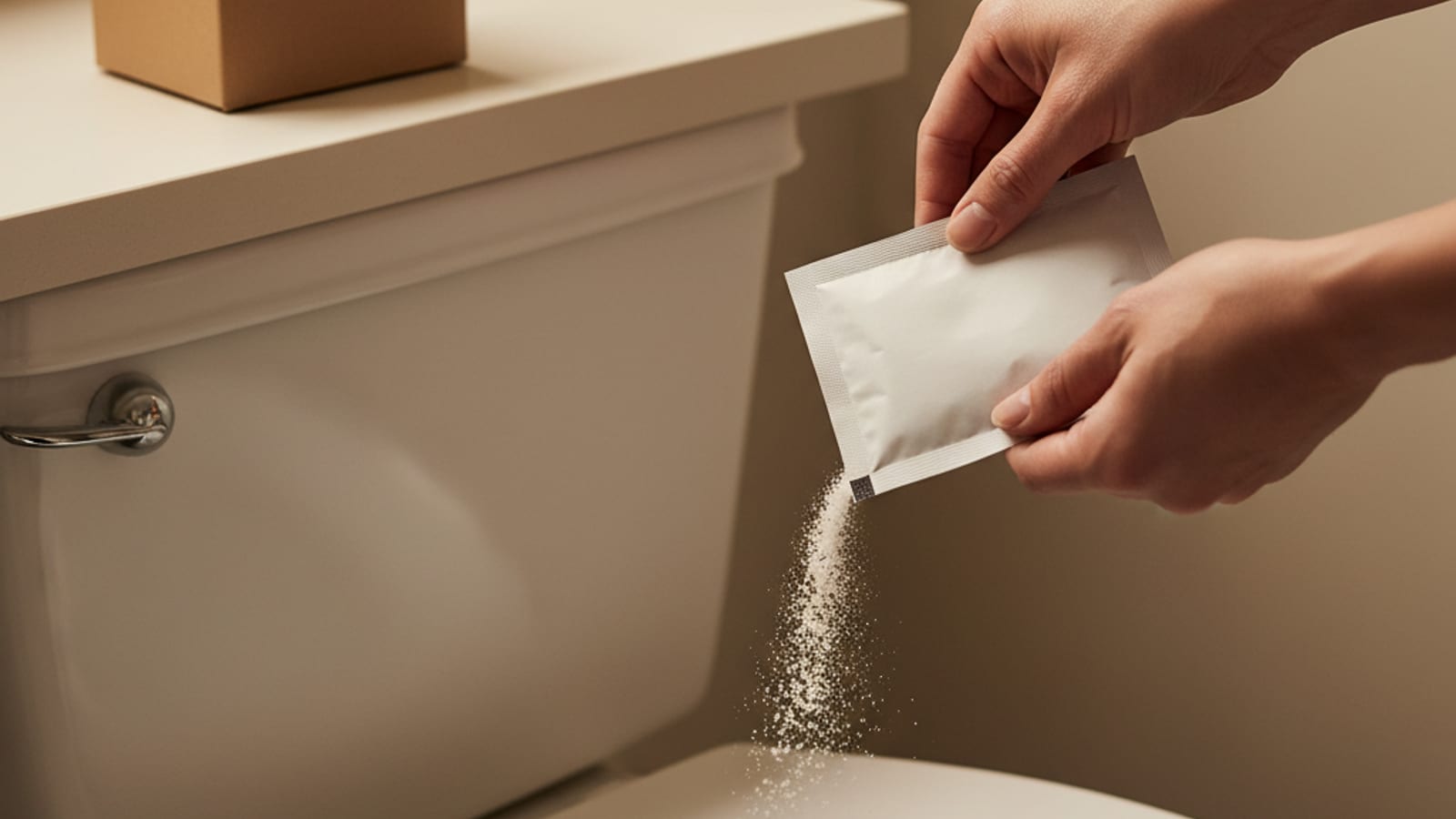
The honest answer most homeowners don’t get: most septic tanks don’t need additives, some do, and a lot of products on the shelf at the hardware store don’t deliver what they promise.
Here’s what the research actually shows, and how to think about whether your tank is one that benefits.
How a septic tank works without additives
A healthy residential septic tank is a self-sustaining microbial ecosystem. Anaerobic bacteria from normal household waste break down solids continuously. They reproduce, die, and are replaced. The system was designed to work this way without intervention, and on millions of homes, it does.
That’s the baseline: most healthy tanks need nothing.
When additives can help
There are real situations where adding biology back to the tank helps:
1. After heavy bleach or antibacterial cleaner use. Pouring a gallon of bleach down the toilet kills tank biology. If this is a regular pattern (not a rare event), periodic bacterial additives help maintain population.
2. After medication treatment. Antibiotics taken by household members pass through and reduce tank biology. A multi-week round of strong antibiotics can knock down tank function temporarily.
3. Vacation homes and seasonal properties. Tanks that go 4+ months without input lose biological balance. A bacterial restart product when you re-occupy helps.
4. After a full cleaning. When the pros we send evacuate a tank for sale prep or post-contamination, they add a starter culture at the end of the visit. Real biology restart matters here.
5. Low-flow homes (1-2 people). Less waste means less biological turnover. Periodic additives keep population stable.
6. Diet patterns that produce hard-to-digest waste. High fat diets, lots of food-prep waste, and garbage disposal use all stress the bacterial population.
When additives don’t help (and may hurt)
The marketing claims that don’t hold up:
“Additives extend pump intervals.” Largely false. Bacteria break down dissolved organics and some sludge biology, but the inorganic and indigestible solids (lint, soil, food fiber, hygiene products) accumulate regardless. Pump intervals are driven by tank size and household waste volume, not bacterial activity.
“Additives clean a clogged drain field.” False, and this is the most harmful claim. Field clogs come from soil biomat buildup and physical solids that should never have reached the field. Bacterial additives don’t reverse biomat. They can sometimes make it slightly worse by sending more biological activity into the trenches.
“Chemical drain openers help your septic system.” False and dangerous. Caustic drain openers kill tank biology, can damage tank components, and can damage the soil biology in the drain field. Use mechanical clearing (snake, auger) instead.
What to use if you do use one
If you fall into one of the situations where additives help, look for:
Bacterial cultures. Multi-strain bacteria specifically formulated for septic systems. Products with documented strain identification and CFU counts on the label are more credible than vague “biological treatment” claims.
Enzyme products. Supplemental enzymes (lipase, protease, cellulase) help break down specific waste types. Useful for high-fat, high-protein, or high-cellulose households.
Avoid:
- Products that promise to “extend” pump intervals beyond your normal schedule
- Products that promise to clean drain fields
- Products with vague ingredient lists
- Yeast (a popular myth, the wrong type of microbe for the job)
- Beef bouillon (also a myth, and adds fat the system has to digest)
What we use on the Tank Pro Plan
For maintenance plan customers, we ship a quarterly biological additive program calibrated to the customer’s specific situation: multi-strain bacteria for low-flow homes, enzyme blends for high-fat households, and no additives at all on healthy high-flow homes that don’t need them.
Most homes don’t need a monthly product. Most homes don’t need any product. The right answer depends on your specific tank, household, and water use.
What actually extends drain field life
If you want to maximize the life of your septic system, here’s what works. None of it is bottled:
- Pump on schedule. The single highest-impact thing you can do.
- Install an effluent filter. Stops solids from reaching the field. $125-$200 retrofit.
- Spread water use across the day. Don’t run all the laundry on Saturday morning.
- Don’t flush wipes. Even “flushable” wipes are not septic-friendly.
- Don’t put fats, oils, grease down the drain. They congeal in the tank and resist digestion.
- Get an annual inspection. Catches small problems before they become field-killers.
A $189 maintenance plan does more for your drain field than any additive on the shelf.
When to call us
Tank Pro SD doesn’t sell additives as a primary service. We use them when they’re appropriate and skip them when they’re not. If you’re trying to figure out whether your tank needs them, call (858) 925-5546 and we’ll give you an honest answer.