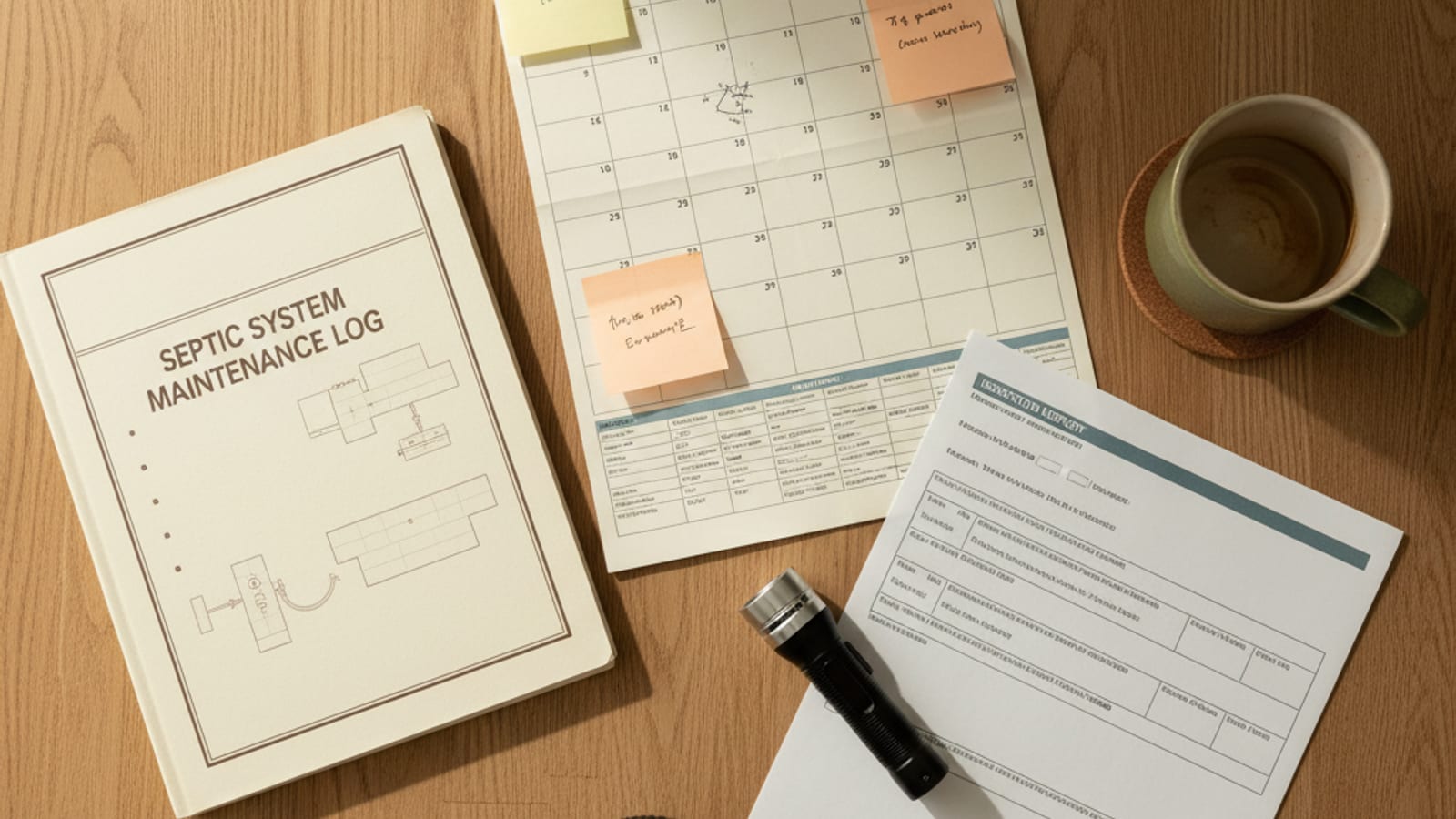
The honest answer: a real maintenance plan typically pays for itself in the first 18-24 months, mostly through avoided emergencies and right-sized pump intervals. After that, the real value compounds in extended drain field life, which is the most expensive thing on the system.
Here’s the math, with real numbers, and what to look for in a plan that’s actually worth signing up for.
What a real plan should cover
A septic maintenance plan worth its annual fee includes:
- Annual visual inspection of the tank, lids, baffles, and drain field surface
- Sludge and scum measurement with actual readings, not estimates
- Effluent filter cleaning at every visit
- Pump scheduling at the right interval for your specific household, set by measured fill rate
- Written annual report for your records, insurance, and resale documentation
- Priority emergency dispatch with a meaningful service-level commitment
- Discount on any repairs found during the inspection (typically 10-15%)
- Optional biological additive program, if your specific situation needs it
Plans that don’t include real measurement and a written report aren’t plans, they’re billing arrangements.
What it costs
In San Diego County in 2026:
- Basic Tank Pro Plan: $189/year, covering annual inspection, sludge measurement, filter cleaning, report, priority dispatch, and a 10% repair discount
- Plus pumping bundle: annual fee + scheduled pump at the right interval, billed per pump at standard rate
- Premium plan: $389-$425/year, which adds biological additive shipments, twice-yearly inspections, and waived after-hours dispatch fees
Most homeowners do well on the basic plan. Premium makes sense for vacation properties, multi-tank estates, or households with specific risk factors (heavy bleach use, large family, marginal field).
The ROI math
Three categories of savings:
1. Avoided emergencies. A typical after-hours emergency call costs $700-$1,400. The plan eliminates the after-hours dispatch fee ($189) on every emergency you do have. More importantly, the annual inspection catches small problems before they become emergencies. Most of our long-tenured plan customers have zero unplanned service calls in a typical year.
2. Right-sized pump intervals. Without measurement, most homeowners pump every 3 years out of caution. With measurement, most homes can extend to 4 or 5 years safely. Skipping one $400-$500 pump every 6-8 years pays for the plan twice over.
3. Extended drain field life. This is the biggest one and the hardest to put a precise number on. Drain fields that get an annual inspection and have effluent filters cleaned routinely consistently last 25-35 years on properly-sized systems. Drain fields that go uninspected often fail at 12-18 years.
Drain field replacement costs $8,000 to $25,000. Even a small extension on field life amortizes the entire plan cost across decades.
When the plan doesn’t make sense
Three situations where you might pass:
Brand new system. If your system was installed in the last 2 years, components are under warranty and the field is unlikely to show problems. Get on a plan starting in year 3.
Routine homeowner who already does the right things. If you pump on schedule, have an effluent filter, get an inspection done at every pump, and have no risk factors, you’re basically running your own plan. The structured plan adds documentation and priority dispatch, but you’re not buying a behavioral change.
Property you’re selling within 12 months. Get a one-time inspection for the sale instead. The plan is optimized for multi-year ownership.
When the plan is a clear yes
Several situations where the math is unambiguous:
You bought the home and don’t know the system history. Plan year one is essentially a baseline year: measurement, documentation, and a clear forward schedule.
You’re not going to remember to schedule it yourself. Honest reflection: if you’ve ever said “I should get the septic checked” and not done it within 6 months, you’re going to benefit from someone else owning the schedule.
You’re a snowbird, vacation-home owner, or rental-property owner. Off-site oversight matters most when the homeowner isn’t there to notice early signs.
Your insurance carrier or HOA requires documented annual maintenance. Some septic-specific insurance riders and some equestrian-property HOAs require annual professional inspection. The plan covers it.
Your drain field is in the 20-30 year age range. This is the danger zone for field failure. Annual inspection at this stage catches the early signs (biomat development, distribution box issues, minor surface signs) when they’re still cheap to address.
What to look for in a plan provider
Three honest filters:
They measure. Sludge depth, scum depth, written numbers in a report. If they don’t measure, they don’t know.
They tell you when you don’t need a pump. A plan provider who pumps you every year regardless of measurement is selling pumps, not maintenance. The measurement should drive the schedule, not the calendar.
They write things down. The annual report should be 2-4 pages of real findings with photos and recommendations. If it’s a sticker on the side of the tank, you’re getting half the value.
Cancel anytime
A real plan should not lock you into multi-year contracts. We bill annually and you can decline next year’s visit with no fee. Most plan customers stay year over year because the value is real, not because the contract traps them.
Sign up
Tank Pro SD offers basic and premium plans across San Diego County. Annual inspection scheduled at your convenience, no contract, cancel anytime. (858) 925-5546 or request a quote.