You know there’s a septic system on the property. You don’t know what condition it’s in. That uncertainty has a price, and it’s almost always lower than the cost of skipping the inspection.
What you actually pay for in a septic inspection
A septic inspection isn’t a single thing. What you’re paying for depends on what type of inspection you book and what the inspector is expected to do.
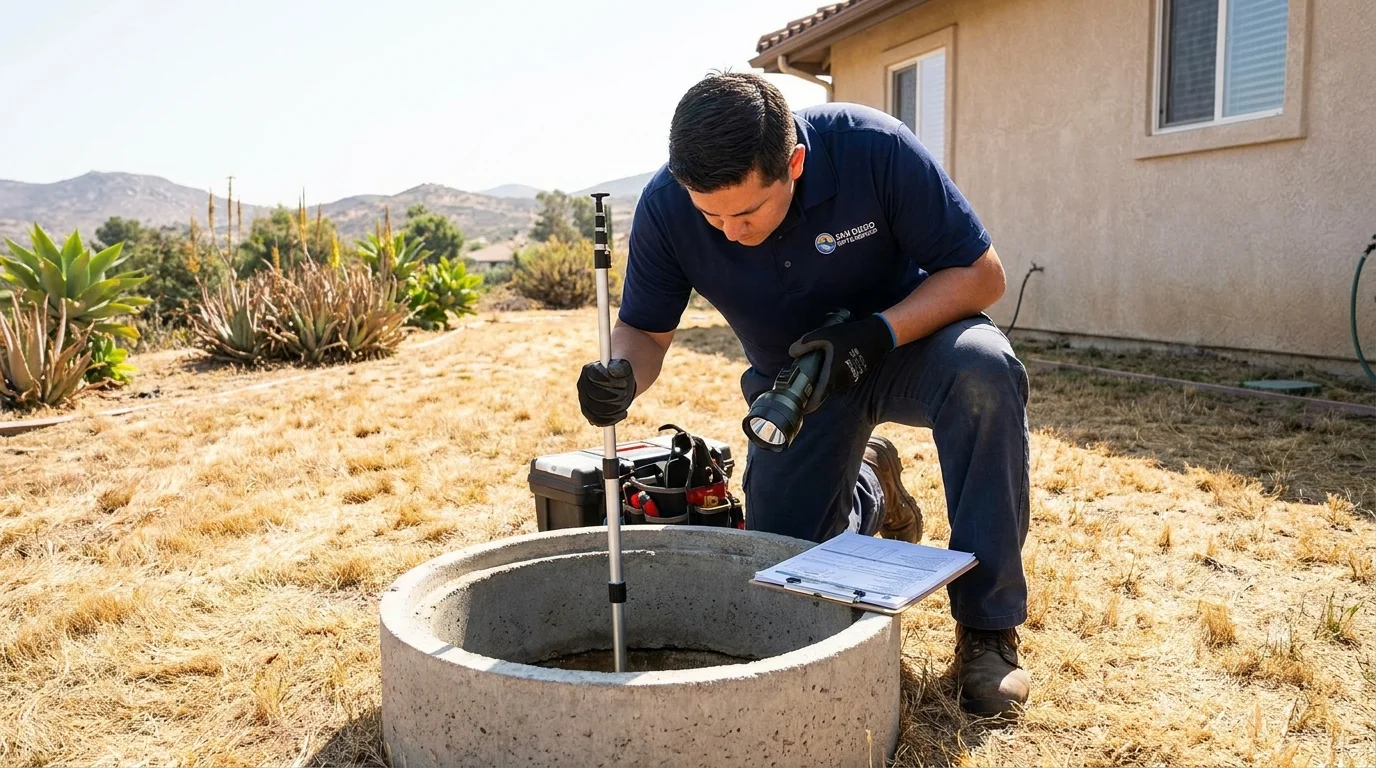
At minimum, you’re paying for someone to show up, locate the tank, and do a visual check. The inspector looks at what’s accessible: risers, lids, any exposed components, and signs of surface saturation near the drain field. This takes 30-60 minutes and doesn’t require pumping the tank.
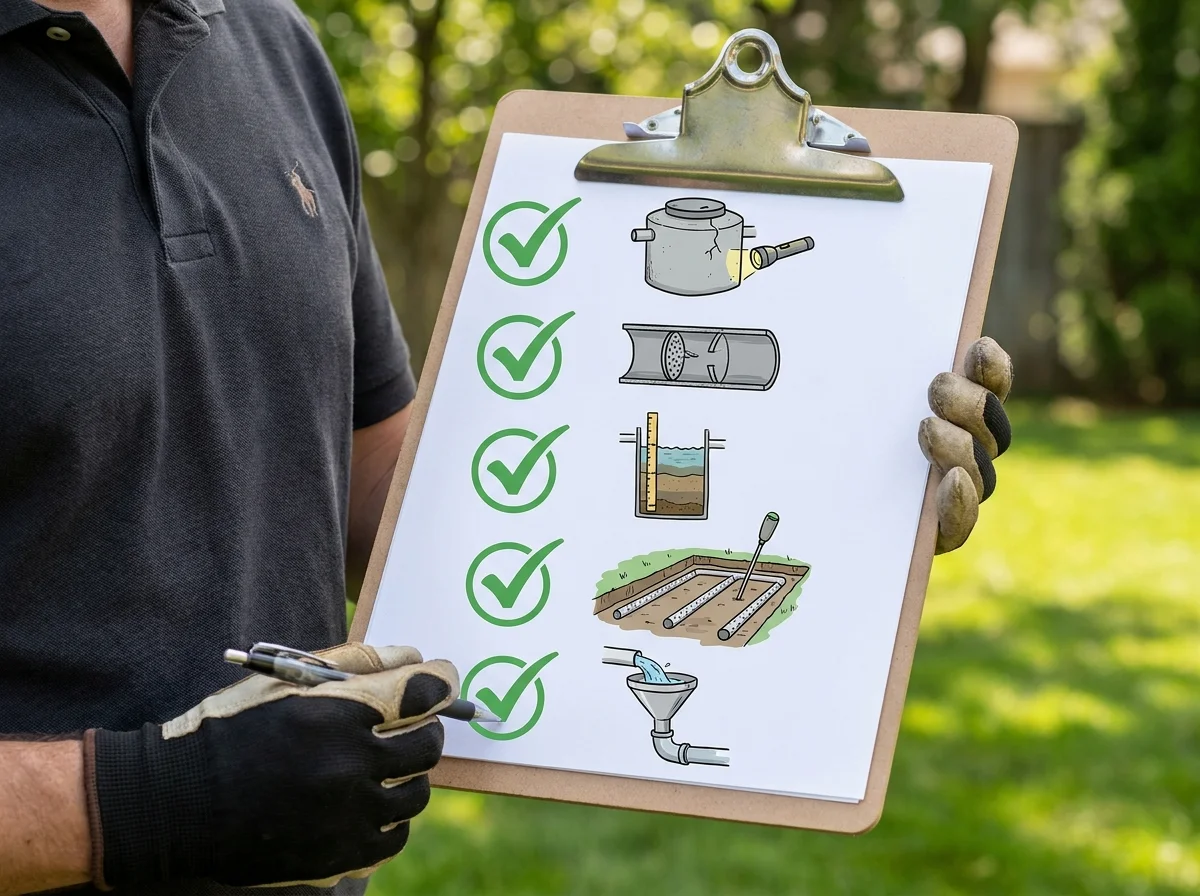
A more thorough inspection goes further. The tank gets pumped so the inspector can see the interior walls, baffles, and outlet tee. The drain field gets a flow test. The inspector checks sludge and scum accumulation to estimate how recently the tank was serviced and how hard it’s been working.
What you’re actually paying for is information. A good inspection report tells you the current condition, estimated useful life, and any repairs the system needs now or in the next few years. That information has direct financial value, whether you’re buying a home, selling one, or just managing a property you’ve owned for years.
Our septic inspection service covers both the visual and the full loaded inspection, depending on what you need.
Visual vs. full (loaded) inspections
These two terms describe the two main inspection types in California, and the difference matters for price and for what you actually learn.
A visual inspection is exactly that: the inspector checks everything visible without pumping the tank. They’ll open the lids, look at the inlet and outlet baffles if accessible, and walk the drain field looking for wet spots, odors, or die-off patterns in the grass. It’s a useful baseline but has real limits. If the baffles are deteriorating below the waterline, a visual won’t catch it. If the drain field is failing slowly, surface signs may not appear yet.
A full inspection (sometimes called a loaded or operating inspection) includes pumping. Once the tank is empty, the inspector can see the interior walls for cracks, check baffle condition directly, and confirm whether the outlet tee is intact. After pumping, water is run through the system at volume to test flow through the drain field under realistic conditions.
Which one do you need?
For routine homeowner peace of mind, a visual inspection every 1-3 years is reasonable. For a real estate transaction, most lenders and buyers’ agents in San Diego County expect a full inspection. Our guide to real estate septic inspections in San Diego covers that in more detail.
2026 price ranges in San Diego County
Here’s what you can expect to pay in San Diego County this year:
Visual inspection: $175-$275. Some companies charge at the low end if the tank is easy to locate and access. If they have to locate and expose the lid themselves, expect the higher end.
Full inspection (with pumping): $400-$650. This includes the pump-out, which alone runs $300-$450 in San Diego depending on tank size and access. If you’re already due for pumping, bundling the inspection with it saves money.
Real estate inspection (full, with report): $450-$750. The extra cost covers a written report formatted for escrow, sometimes including photos and a pass/fail summary. Some inspectors charge separately for the report; most bundle it.
These are current market ranges for licensed C-42 contractors working in San Diego County. You can verify a contractor’s CSLB license at the California CSLB license check tool.
Costs vary by location within the county. Properties in East County or North County inland areas sometimes involve longer drives or harder-to-access tanks on hillside lots, which can push prices toward the higher end.
Why real estate inspections cost more
When a septic inspection is part of a home sale, the stakes are different. The buyer’s lender may require it. The buyer’s agent may specify a pass/fail format. And if the system fails, what happens next is a negotiated part of the transaction.
That last point is where the cost comes from. A real estate inspection report has to be clear enough for a real estate attorney to interpret. It needs timestamps, photos, and a written conclusion. Some county health departments also require a copy for their records, depending on what’s found.
The San Diego County Department of Environmental Health has authority over OWTS (onsite wastewater treatment systems) in unincorporated areas. If an inspection reveals a system that’s out of compliance with current county standards, the seller may have to repair or replace before escrow closes.
A failed inspection doesn’t automatically kill a sale. But it changes the negotiation. The seller can repair, replace, or credit the buyer for the work. If the system needs a full replacement, you’re looking at $15,000-$40,000 depending on system type. See our breakdown of septic system costs in San Diego for what those numbers look like.
That’s why buyers push for full inspections. The $500-$650 you spend upfront is cheap compared to the alternative.
What an inspection can save you
The point of an inspection isn’t to find problems. It’s to find them before they get expensive or urgent.
Septic systems fail in predictable patterns. Baffle deterioration, drain field saturation, cracked tank walls from soil movement: these develop slowly and show warning signs before they become emergencies. An inspector who knows what to look for can catch a $400 baffle repair before it becomes a $6,000 drain field replacement.
If you’ve noticed slow drains, gurgling sounds, or wet patches near the drain field, don’t wait for a scheduled inspection. Those are warning signs of a system under stress. Our post on septic warning signs and failing systems explains what each symptom usually means and how urgent it is.
The US EPA SepticSmart program recommends inspecting your septic system every 3 years as a baseline, with pumping every 3-5 years depending on household size. In San Diego County, clay soils and the region’s dry-season concentration of water use can stress systems more than average rainfall patterns might suggest. Inspecting on a regular schedule keeps you ahead of that.
Beyond repairs, an inspection gives you a maintenance baseline. You’ll know when the tank was last pumped, what the sludge accumulation rate looks like, and whether your current pumping schedule is right for your household. That information makes it easier to budget and plan.
Booking an inspection
Most homeowners book a septic inspection for one of three reasons: they’re buying or selling a home, they haven’t had one in years, or something’s not working right. All three are valid, and the process is the same.
Call ahead and tell the company what you know about the system: approximate tank size if you know it, when it was last pumped, whether you have riser access or will need the lid located. That information helps the inspector prepare and gives you a more accurate quote before they show up.
In San Diego County, reputable inspectors should be licensed as a C-42 sanitation system contractor by the CSLB. If the person doing the work is doing more than a visual observation (pumping, testing, accessing the tank interior), they need that license. Don’t accept a quote from someone who can’t provide a license number.
If you’re booking for a real estate transaction, confirm whether the company provides a written report in a format your escrow or lender will accept. Some companies charge extra for the report; most bundle it with the full inspection price. Ask before you book.
When to call us
If you’re buying or selling a home with a septic system, or if your system hasn’t been inspected in the last three years, it’s time to schedule one. A licensed C-42 inspector can tell you what condition your system is in and what, if anything, it needs.
Call us at (858) 925-5546 for a same-day estimate.