A failing septic tank isn’t a problem you can defer forever. When it goes, you need real numbers fast, not ballpark figures from a website written for a different state. Here’s what septic tank replacement actually costs in San Diego County in 2026, and what drives that number up or down.
When does a septic tank actually need replacing (vs. repair)?
Not every sick tank needs to be replaced. The distinction matters because repair costs a fraction of replacement. Here’s where the line falls.
A tank is a candidate for repair when the problem is isolated. Cracked inlet or outlet baffles, a failing lid, or a damaged access riser can all be fixed without pulling the tank. Baffle and tee replacement and septic riser installation are relatively affordable fixes that extend tank life considerably.
Replacement becomes the right call when:
- The tank body has structural cracks, not surface crazing. Water and waste are escaping into the surrounding soil.
- The tank is decades-old concrete that’s collapsed or is actively caving.
- A licensed inspector confirms the tank can’t hold water.
- You’ve had multiple failures in a short span and repair costs are adding up past the replacement threshold.
One test worth knowing: a water retention test. A licensed septic inspection includes this. The tank is pumped, filled with clean water, and observed. If the water level drops significantly, the tank is failing structurally.
If you’re uncertain whether your tank needs repair or replacement, read our post on septic warning signs of a failing system before you commit to either path. And if your system was simply overdue for service, a septic tank repair may solve the problem without a full excavation.
What goes into the price?
Five variables move the needle most on septic tank replacement cost in San Diego County.
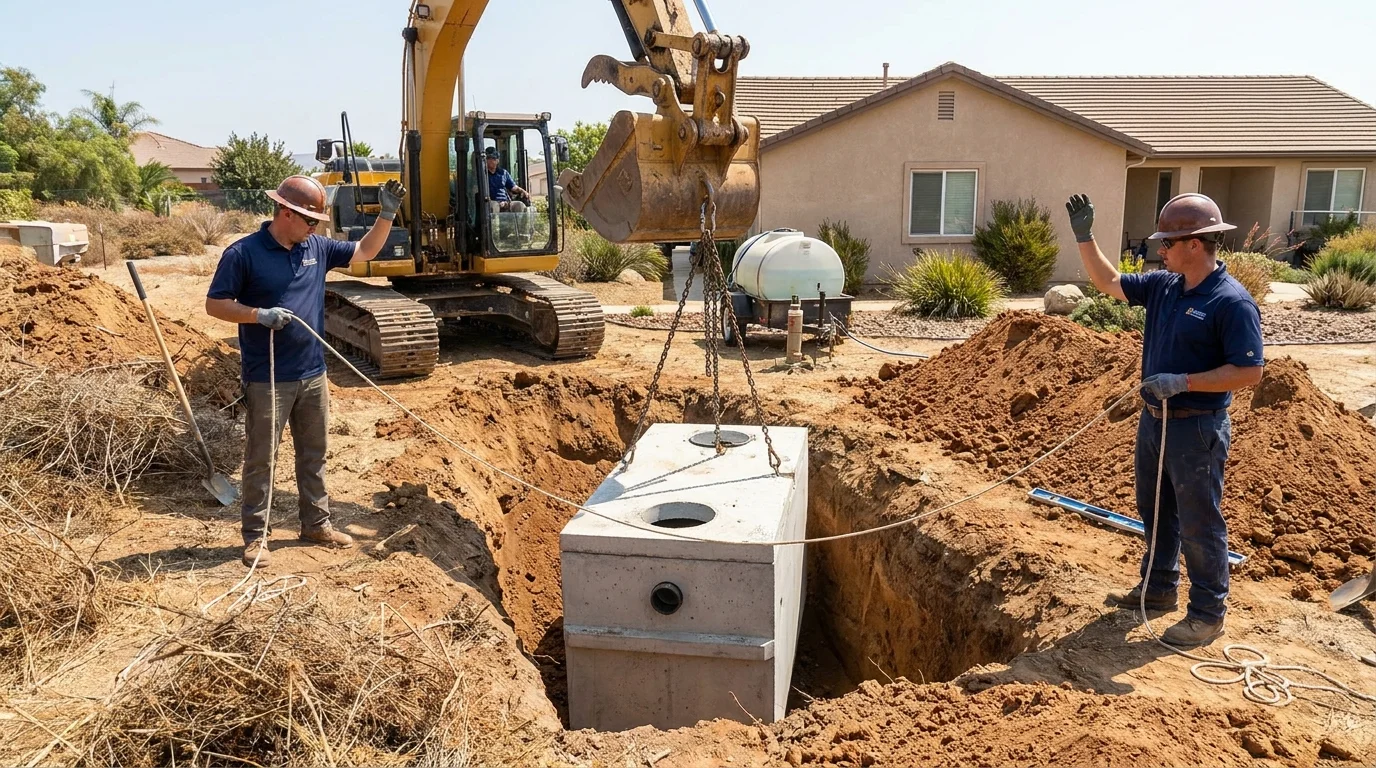
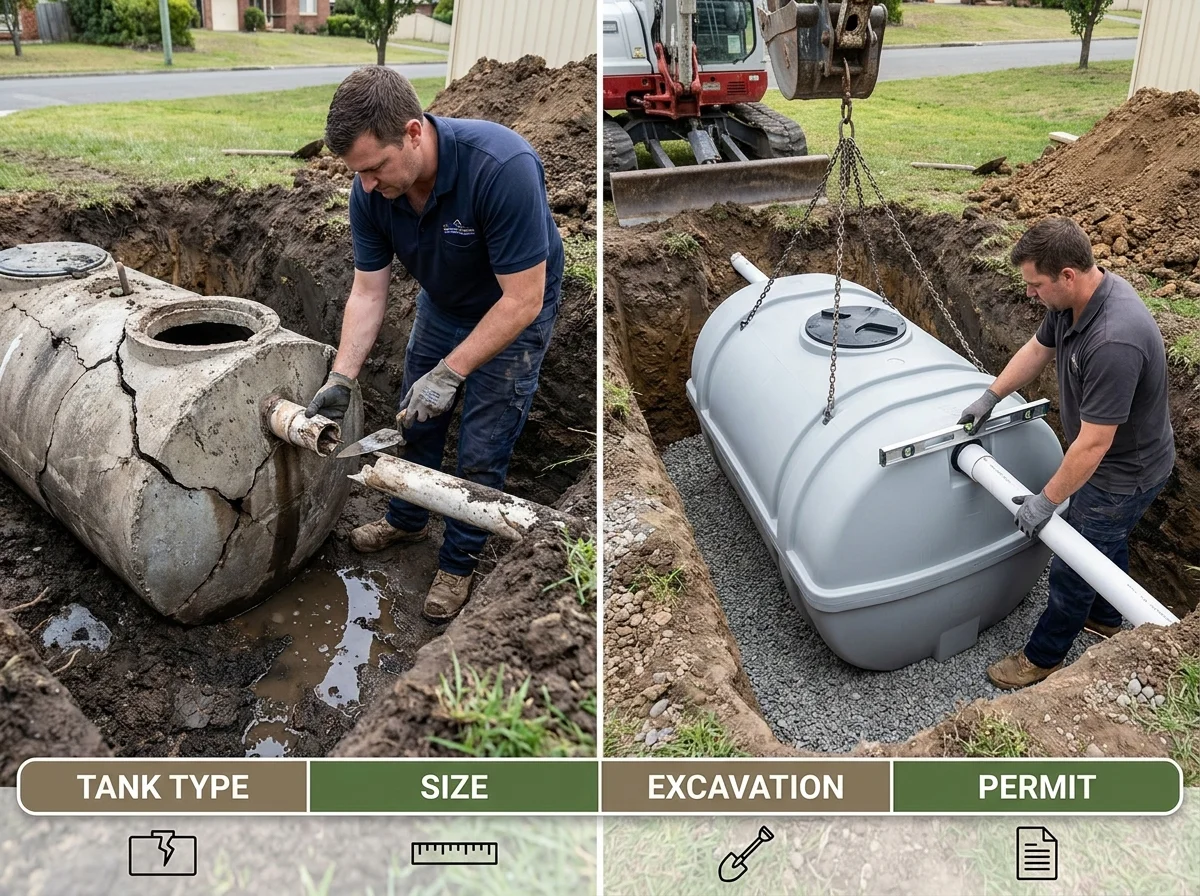
Tank type. Concrete tanks dominate the county. They’re heavy, require heavy equipment to place, and cost more upfront. Polyethylene (poly) or fiberglass tanks are lighter and easier to install in tight spaces, but not every site or jurisdiction is set up for them.
Tank size. A 1,000-gallon tank handles a standard 3-bedroom home. Step up to 1,500 gallons for larger homes or systems that see heavy use. Bigger tank, bigger price.
Excavation difficulty. A straightforward dig in sandy soil costs far less than breaking through the hard clay and decomposed granite common in East County and the foothills. Rocky sites, steep grades, or tank locations under concrete or pavers add labor hours fast.
Access. If a service vehicle can’t reach the tank area, equipment costs rise. Tight side yards, hillside lots, and properties with mature trees near the tank line all create complications.
Permit and inspection requirements. San Diego County Department of Environmental Health (DEH) requires a permit for any septic tank replacement. The permit process includes a site assessment and inspection at installation. You can’t legally skip it, and you wouldn’t want to. More on this below.
Real 2026 price ranges for San Diego County
These ranges reflect actual conditions in San Diego County in 2026. They include tank material, labor, and standard excavation. They don’t include permit fees, unusual site conditions, or drain field work.
Polyethylene or fiberglass tank (1,000-gallon): $3,500-$5,500 Concrete tank (1,000-gallon): $4,500-$7,000 Concrete tank (1,500-gallon): $6,000-$9,500 Complex excavation add-on (rocky soil, tight access, hillside): $1,000-$3,500 on top of base price
If your existing tank is near a structure, a retaining wall, or old infrastructure that needs to be worked around, budget toward the high end. If it’s a clean dig in a flat open yard, the lower end is realistic.
For comparison: a new septic system installation (tank plus a full drain field, on a vacant lot or a property converting from sewer) costs more. If that’s your situation, our post on septic tank installation cost in San Diego breaks it down separately.
Permit, inspection, and site costs people forget
The permit is not optional and it’s not cheap. The San Diego County DEH land use program oversees all on-site wastewater treatment systems (OWTS) in unincorporated areas. Permit fees vary depending on system complexity and are set by the county, not by the contractor.
Plan for these additional costs:
DEH permit fee: Typically $400-$900 for a replacement in a straightforward case. More complex systems or sites in sensitive zones run higher. Get this number directly from DEH for your address before you budget.
Soil testing or percolation test: If DEH requires one for your site, add $300-$600.
Pumping the existing tank: Before replacement begins, the old tank needs to be pumped out. If it hasn’t been serviced recently, add $300-$500 for a standard residential pump.
Haul-away and disposal of the old tank: Concrete tanks are sometimes crushed in place and buried if they meet county requirements. If they need to be pulled and hauled, add $500-$1,500 depending on weight and disposal logistics.
Temporary use of a portable toilet during work: A few days, usually $100-$200. Small line item, easy to forget.
The US EPA SepticSmart program has good homeowner guidance on what to expect during installation and why permits protect you. Don’t skip that reading if you’re new to septic ownership.
How to save money without cutting corners
The biggest money-wasters in septic replacement are avoidable with a little planning.
Don’t wait until it’s an emergency. Emergency septic service costs more than a planned replacement. If you know the tank is failing, get quotes now and schedule the work at a time that works for your contractor, not under crisis conditions.
Get three quotes. Prices vary among contractors. Ask each one for a line-item breakdown: tank cost, labor, excavation, haul-away, and permit. A quote with no line items is a warning sign.
Verify your contractor’s license. Septic contractors in California work under CSLB license Class C-42 (Sanitation System Contractor). You can verify a CSLB license here before you sign anything. Unlicensed work won’t pass county inspection and can leave you liable.
Ask about tank size before assuming. An undersized original tank might explain why you’ve had repeated issues. Upsizing during replacement costs a few hundred dollars more upfront but solves the root problem.
Combine work when possible. If your drain field repair is also on the horizon, doing both at the same mobilization saves on excavation costs versus two separate digs.
Consider a septic maintenance plan. After installation, keeping the system on a regular schedule protects your investment. See septic maintenance for what that looks like.
Getting an honest replacement quote
A good quote tells you the total cost before work starts, with no meaningful surprises at the end. Here’s what to ask for:
- Line-item pricing (tank, labor, excavation, disposal, permit filing assistance)
- Whether the quote includes pumping the existing tank
- What site conditions would change the price, and by how much
- Their CSLB C-42 license number so you can verify it
- Whether they handle permit filing with DEH or you do
A contractor who can’t give you a straight answer on any of those points isn’t the right fit for a project this size.
Replacement quotes for San Diego County vary by city. A property in Ramona, Santee, or Lakeside may have different soil and access conditions than one in Chula Vista or Spring Valley. Contractors who work regularly in your area will price it more accurately than those who don’t.
The California Water Boards OWTS Policy governs statewide standards for septic systems. Your county applies those rules at the local level, but knowing the framework helps you ask better questions.
When to call us
If your tank has failed inspection, your yard is showing signs of backup, or you’ve been told replacement is the next step, don’t wait. Tank Pro SD handles septic tank replacement across San Diego County with full permit coordination with San Diego County DEH. Call us at (858) 925-5546 for a same-day estimate.