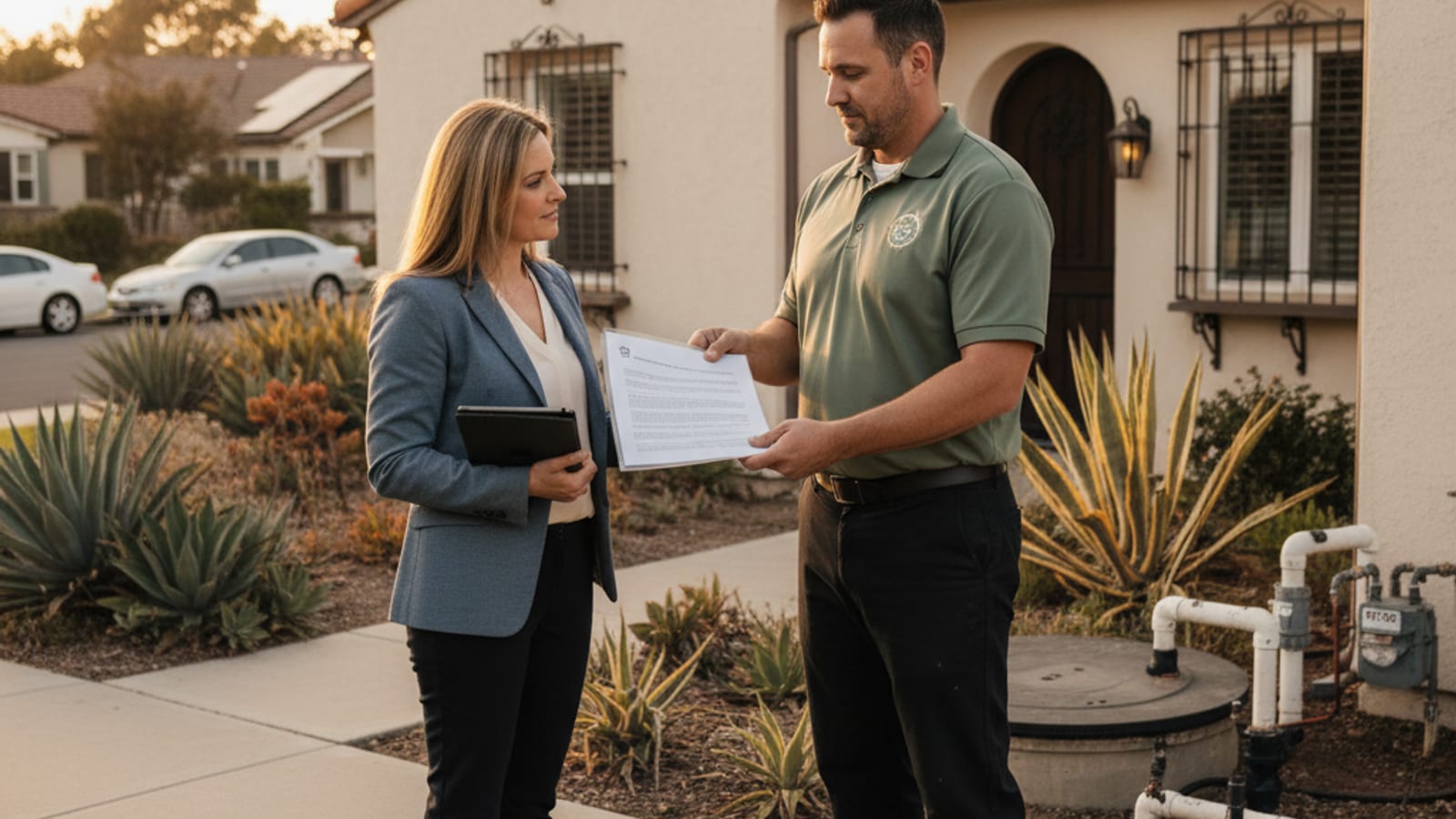
If you’re buying a home with a septic system in San Diego County, the septic inspection is the most important contingency you’ll exercise. Skipping it or accepting a “drive-by” inspection is how buyers end up with a $25,000 surprise three months after close.
Here’s what a proper inspection covers, what it should cost, what the report should look like, and how to use the findings.
What a real inspection actually includes
A real-estate-grade septic inspection in San Diego County should always include:
- A full pump. You can’t see what’s in the tank without emptying it. Visual-only “inspections” miss damaged baffles, settled scum, cracked walls.
- Sludge and scum measurement with a calibrated Sludge Judge before the pump. Tells you how the previous owner managed the system.
- Interior tank exam after pumping, covering wall integrity, seam condition, baffle and tee inspection (camera or direct visual), and the riser-to-tank seal check.
- Effluent filter inspection and cleaning, if installed.
- Hydraulic load test on the drain field, running 50 to 200 gallons through the system over 30 to 60 minutes to verify field absorption capacity.
- Surface inspection of the drain field area for ponding, settling, vegetation anomalies.
- Camera inspection of the inlet line from the house and the outlet line to the drain field.
- Written 6 to 10 page report with photos, measurements, and a clear pass/fail summary.
Anything less than that is not a real-estate inspection. It’s a routine pump dressed up as one.
What it should cost
In San Diego County, a full real-estate-grade inspection runs $475 to $725 depending on tank size, lid access, and whether a longer 4-corners hydraulic test is requested.
Visual-only inspections (lid lifts, surface walk, no pump) run $200 to $275 and are fine for routine baselines but not appropriate for escrow. If you’re buying, do not accept the visual-only price as the inspection price.
What the report should tell you
A real inspection report has three sections that matter:
1. Findings. What was measured, what was visually verified, what was photographed. Numbers, not adjectives.
2. Condition rating per component. Tank, baffles, lids, risers, drain field, and lines each get rated good / acceptable / needs attention / failing.
3. Estimated remaining life and cost forecast. A drain field with 5 to 10 years of life left looks very different in your offer than one with 15 to 20 years left. The report should put a realistic number on it.
If you get a report that says “system passed inspection” without component-level findings, you didn’t get an inspection. You got a sales summary.
How to use the findings in negotiation
Three common scenarios:
Clean report, recent service history. Move forward at the agreed price. Save the report for your file.
Clean report, no service history. Negotiate a $400 to $600 credit at close to cover a fresh service in the first six months. The seller usually grants this without resistance.
Real findings. Use the report’s cost forecast as your basis. A documented baffle replacement, lid repair, or partial drain field rehab gives you a defensible number. A failing field gets full replacement quotes ($8,000 to $25,000) and becomes a bigger negotiation, sometimes a price reduction, sometimes a seller-funded escrow holdback for the work to be done after close.
What you don’t want to do: accept a “we’ll pump it before close” offer in place of a real inspection. A pump empties the tank but tells you nothing about the components or the drain field.
When in escrow you should schedule it
Schedule the inspection in the first 5 to 7 days of your contingency period. That gives time for the inspector to do the work (typically scheduled within 5 business days), for the report to come back (within 48 hours), and for you to get repair quotes if anything is flagged.
Waiting until the last 3 days of contingency is the most common mistake. If the report finds something, you’re negotiating under time pressure with no quotes in hand.
What about VA and FHA loans?
VA loans require a documented septic inspection and a passing condition for the property to qualify. FHA is similar though slightly less strict. Both lenders want the inspection on file. We see VA-flagged septic findings about 25% of the time on rural inland and East County properties, almost always related to either drain field condition or non-permitted system additions.
If you’re a VA buyer, schedule the septic inspection separately from the general home inspection. Generals don’t cover septic in any depth, and the inspector should be a licensed C-42 contractor.
What sellers should do before listing
If you’re selling a home with a septic system in San Diego County, get an inspection done before you list. Two reasons:
- You learn what’s there and can address it on your own timeline at retail prices, not under buyer pressure at retail-plus-urgency prices.
- The inspection report becomes a marketing asset. “Septic inspected and serviced [date]” in the listing and disclosures shortens negotiation and increases buyer confidence.
The inspection cost ($475 to $725) is one of the highest-ROI pre-list expenses in rural SD County real estate.
Schedule with us
Tank Pro SD does real-estate inspections across San Diego County with same-week scheduling and 48-hour written reports. Rush 24-hour reports available for active escrows at no extra cost, just tell us when you book. (858) 925-5546.