Your septic tank gets all the attention. The leach field does all the real work. Most homeowners never think about it until the yard smells like sewage or the drains back up, and by then the damage is usually expensive to fix.
Leach field vs. drain field: same thing?
Yes. “Leach field” and “drain field” are two names for the same thing. Some people also call it an absorption field or a soil treatment area. The terminology varies by region and by who’s doing the explaining.
The county uses “OWTS” (onsite wastewater treatment system) in permit language. Engineers often say “soil treatment area.” Plumbers say “leach field.” Homeowners say both, sometimes in the same sentence. It doesn’t matter which term you use. The system is identical.
What matters is understanding what it does and why it’s the most vulnerable part of your septic setup.
How a leach field treats wastewater
Here’s the short version. Wastewater from your house flows into the septic tank. The tank separates it into three layers: scum floats to the top, solids sink to the bottom, and liquid (effluent) sits in the middle. That effluent flows out of the tank and into the leach field.
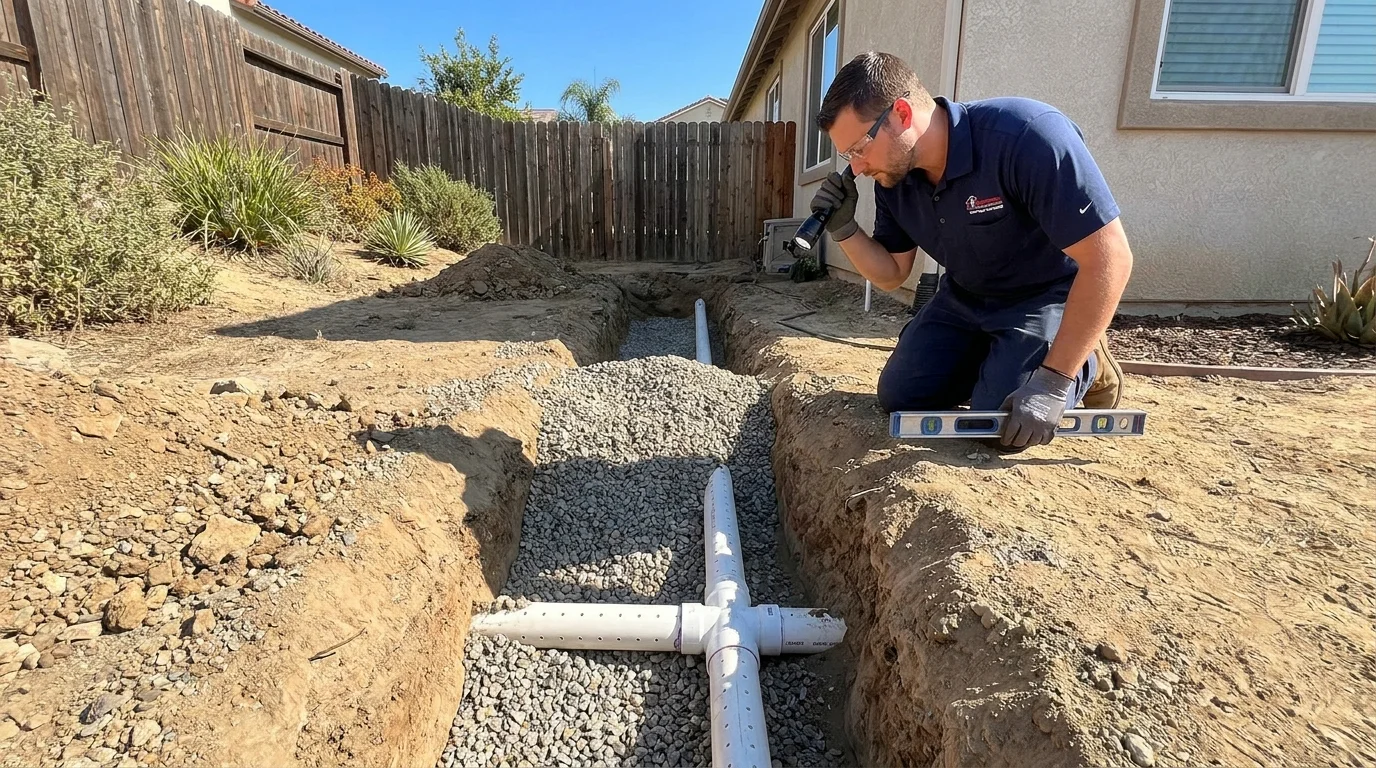
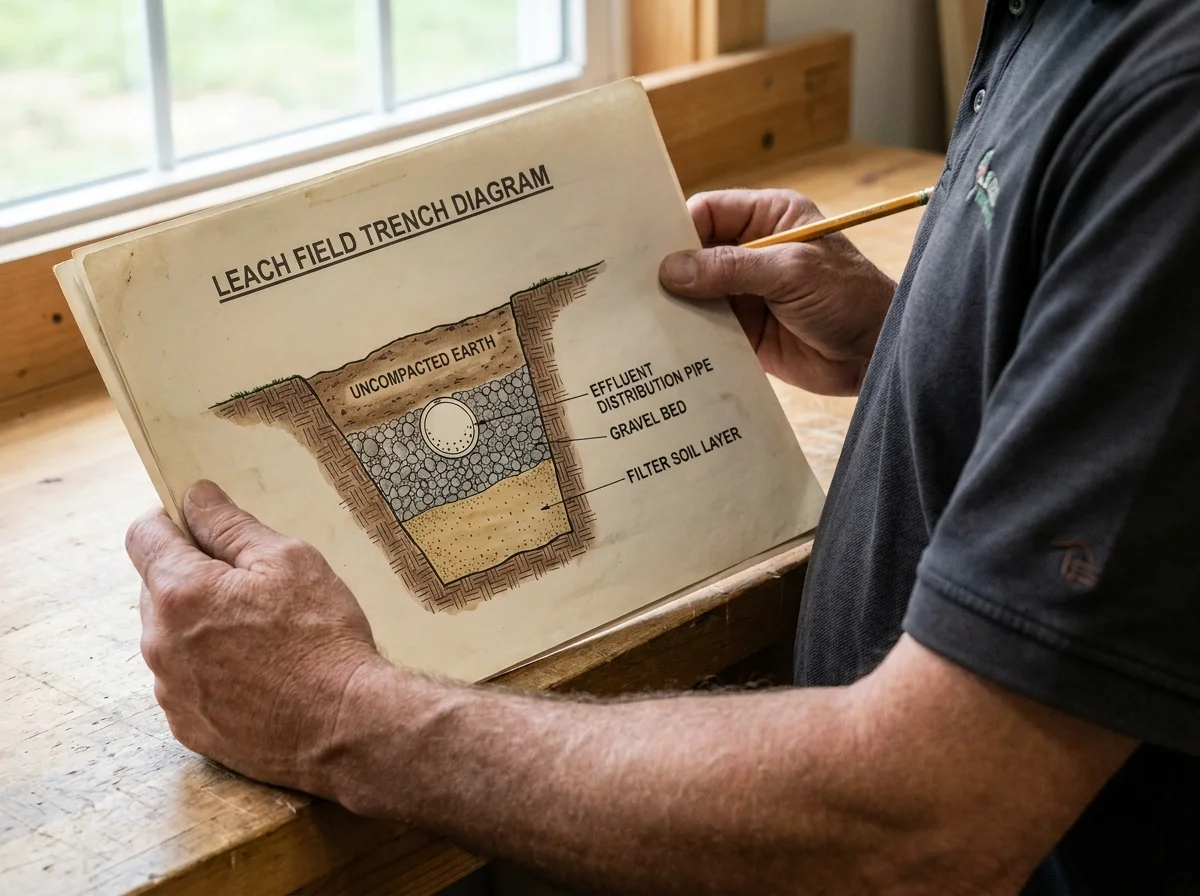
The leach field is a network of perforated pipes buried in trenches filled with gravel. Effluent drips out of those pipes and percolates through the gravel, then through several feet of native soil. The soil is where the actual treatment happens. Bacteria in the soil digest pathogens and nutrients. By the time the water reaches the water table, it’s been filtered to a degree that a treatment plant would recognize.
The pipes themselves are simple. The gravel bed supports even distribution and prevents the soil from clogging too fast. But the soil is irreplaceable. It took decades to develop the right microbial community. That’s why a failed leach field is so hard to fix quickly: you can replace pipes, but you can’t rush soil biology.
In San Diego County, soil composition varies a lot. The California Water Boards OWTS Policy sets statewide minimum standards, and the County Department of Environmental Health enforces local rules on top of those. Perc tests (percolation tests) are required before installation to confirm the soil can handle the load.
What a healthy leach field looks like
A working leach field is invisible. The grass above it grows normally, maybe slightly greener in patches where the effluent adds nutrients. The ground is firm. There’s no standing water, no soft spots, and no odor.
A few signs that things are going right:
- Drains in the house clear quickly with no gurgling
- No sewage smell inside or outside the house
- No wet areas or pooling water over the field
- Your tank pumping schedule is consistent (every 3-5 years for most households)
It’s also worth knowing where your leach field is. If you don’t know, your county permit records or a septic inspection can locate it. You need to know so you don’t accidentally damage it, which brings us to the next section.
Common causes of leach field failure
Most leach fields don’t fail overnight. They fail slowly, over months or years, because of things that are entirely preventable.
Overloading the system. Every septic system has a daily capacity, measured in gallons per day, based on your permit. If you consistently push more water through than the field can absorb, the soil stays saturated. Saturated soil can’t treat wastewater. The field biomat (the biological layer at the soil surface) thickens until it seals off. This is called biomat failure, and it’s the most common cause of field problems in San Diego County.
Parking or building over the field. Heavy vehicles compact the soil. Compacted soil can’t absorb water. Even parking a pickup truck there regularly is enough to do damage over a few years. Sheds, decks, and patios have the same effect, and they also block the oxygen exchange the soil needs.
Tree roots. Roots from trees and large shrubs follow moisture. Leach field pipes are full of moisture. Roots crack pipes, clog distribution, and disrupt the gravel bed. Keep trees and large shrubs at least 30 feet from the field. Some species (willows, eucalyptus, certain palms) should stay further away.
Neglecting the tank. If you don’t pump your tank on schedule, solids build up and eventually flow into the leach field. Solids don’t belong in the field. They clog the gravel and kill the soil. A pump-out every 3-5 years is cheap compared to a field replacement.
Flushing the wrong things. Wipes (even ones labeled flushable), grease, harsh cleaning chemicals, and antibacterial products all damage the biological system that makes your field work. The EPA’s SepticSmart program has a straightforward list of what belongs down your drains and what doesn’t.
How to protect yours in San Diego County
Protection is mostly about avoiding the causes listed above. But there are a few specific things worth doing if you’re in San Diego County.
Divert surface water away from the field. SD County gets most of its rain between November and March. If your grading or landscaping channels runoff toward the leach field, you’re saturating it every wet season. Keep the field crowned slightly so water sheds away, and make sure downspouts don’t drain toward it.
Plant the right things over it. Native grasses and low-water groundcovers are fine. They have shallow roots, add minimal moisture to the soil, and don’t compact the ground the way hardscape does. Avoid any root-aggressive plants.
Schedule regular inspections. A licensed septic inspector can assess whether the field is draining properly, check distribution box flow, and catch early signs of failure before they become full replacement situations. See Septic Inspection if you haven’t had one in the past few years.
Know your tank’s pump schedule and stick to it. The tank and the leach field are connected. A neglected tank destroys a field. There’s no way around it.
When a leach field needs repair or replacement
Signs of field failure include slow drains that don’t clear even after the tank is pumped, soggy ground or pooling water over the field, sewage odor outdoors (especially after rain), and bright green grass in patches that doesn’t match the rest of the yard.
Not every failing field needs full replacement. Some can be restored. Drain field repair covers several approaches depending on the cause: jetting clogged pipes, replacing distribution boxes, installing additional lines, or aerating compacted soil. The right fix depends on how far along the failure is and what caused it.
If the field has been saturated and biologically compromised for years, replacement is usually the honest answer. A new field costs more up front, but it comes with a reset and proper sizing for your household’s actual load. For a side-by-side breakdown of when each option makes sense, read drain field repair vs. replacement.
Replacements require a county permit through the San Diego County Department of Environmental Health and must be done by a contractor with a CSLB C-42 (Sanitation System Contractor) license. You can verify any contractor’s license at the CSLB license check page before you hire.
When to call us
If your drains are slow, there’s odor near the field, or you haven’t had a septic inspection in the last few years, it’s worth getting a professional assessment before the problem compounds. Leach field issues caught early are repairs. Caught late, they’re replacements.
Call us at (858) 925-5546 for a same-day estimate.