A septic smell inside your house usually means one of three things: a drain trap dried out, a plumbing vent is blocked, or the tank is full and venting backward into the home. The first two are cheap fixes you can often do yourself. The third needs a pump. A rotten-egg smell that comes and goes with the weather points to a vent. A constant sewer smell near one drain points to that drain’s trap. Here’s how to tell which one you have.
Start here: inside or outside?
Walk the smell down before you call anyone. Where you smell it narrows the cause fast.
Smell inside the house almost always comes from the plumbing, not the tank. Sewer gas gets into the living space through a dry trap or a blocked vent. The tank can push gas back inside, but only when something downstream is wrong too.
Smell outside, over the tank or yard points at the septic system itself. A healthy tank is nearly odorless from the surface. If you smell it standing in the yard, a baffle, lid seal, or the drain field is the issue.
Get this part right and you save a service call. A dried trap costs you a cup of water. A drain field repair costs thousands.
The cheap indoor causes (DIY first)
A dried-out P-trap
Every drain has a U-shaped pipe that holds a little water. That water blocks sewer gas from rising into the room. Guest bathrooms, floor drains, and laundry sinks that go unused for weeks lose that water to evaporation. San Diego’s dry air speeds this up, and it’s worse in a vacation home or a rarely used East County guest unit.
Fix: Run water in every drain for ten seconds, including the floor drain. Pour a cup of water down any drain you never use. Cost: nothing.
A blocked or short plumbing vent
Your plumbing vents through the roof. That vent lets sewer gas escape up and out, and lets air in so drains don’t gurgle. Block it and gas finds another way out, usually back through a trap. Leaves, a bird nest, or a wasp nest are common culprits in our canyon and hillside neighborhoods.
You’ll often notice the smell tracks the wind or the weather. A Santa Ana downdraft can push vent gas back toward the house. Fix: Clear the vent opening on the roof, or have it cleared. A vent that’s too short or terminates near a window may need an extension.
Wax ring or seal failure at a toilet
A toilet that rocks slightly, or smells faintly of sewer at the base, often has a failed wax ring. Fix: Reset the toilet with a new wax ring. This is a plumbing fix, not a septic one, but people blame the septic system for it constantly.
When the smell means the tank, not the plumbing
If the indoor checks come up empty, or the smell is strongest in the yard, the system is talking to you.
A full tank vents sewer gas backward through the house when effluent can’t move out fast enough. You’ll usually notice slow drains and gurgling at the same time. If you’ve gone five-plus years with no pump and no records, that’s your answer. A routine pump clears it.
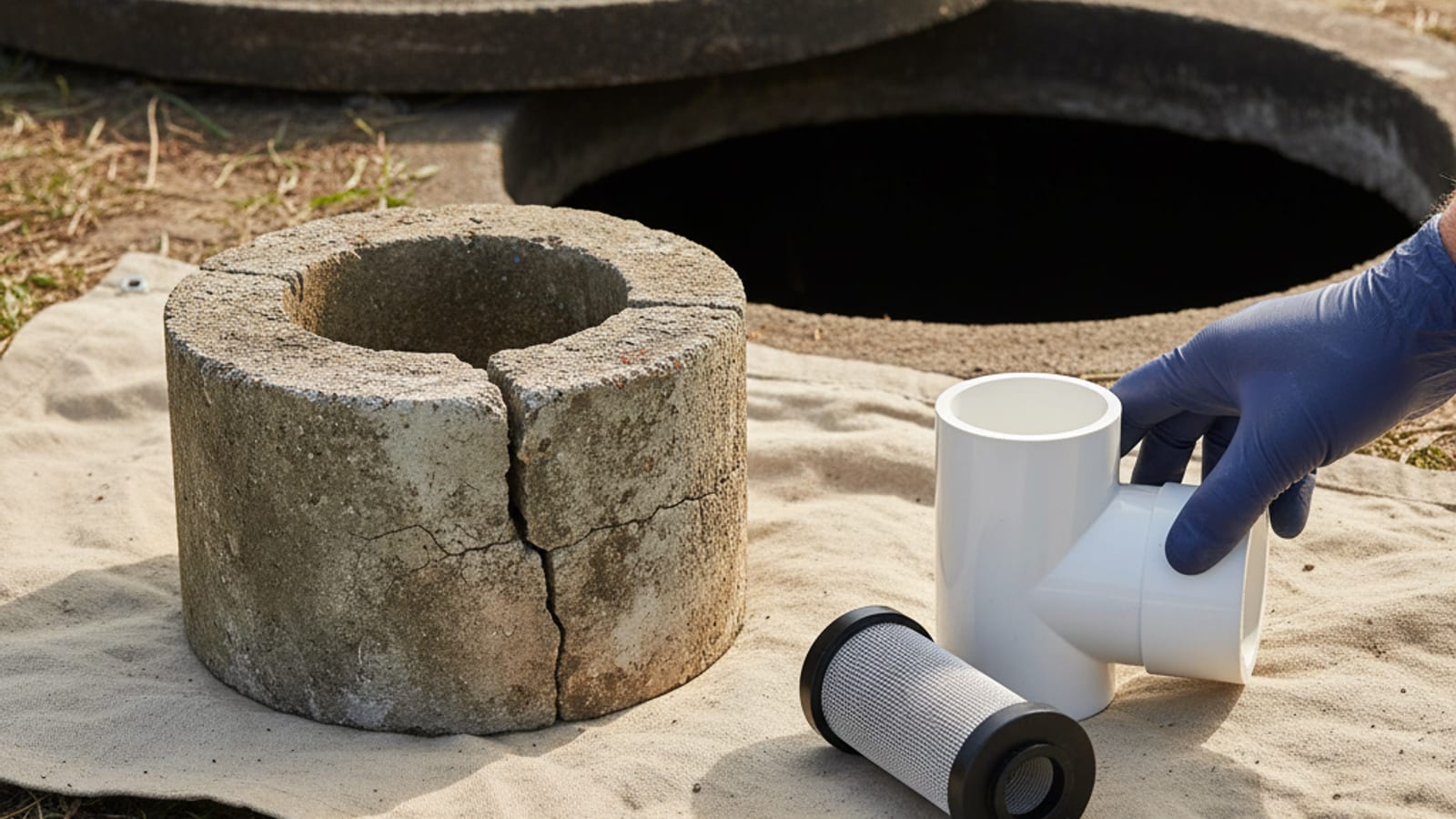
Smell directly over the tank means a broken or missing baffle, a cracked lid, or a failed lid gasket letting gas escape at the surface. Smell over the drain field means effluent is reaching the surface, which is early field failure and not something to sit on.
We cover this trio of yard symptoms in more depth in our guide to septic warning signs.
What it costs to fix in San Diego County
Prices below are typical ranges for SD County work. Backcountry travel to Julian, Pine Valley, or remote Ramona can add a trip charge, which we quote upfront before we drive.
| Cause | Typical SD County cost |
|---|---|
| Dried P-trap | $0, run water |
| Cleared roof vent | $150 to $350 |
| New wax ring at toilet | $150 to $300 |
| Routine tank pump | $325 to $525 |
| Baffle or lid-seal repair | $250 to $900 |
| Drain field jetting and rehab | $850 to $2,400 |
| Drain field replacement | $8,000 to $25,000 |
The gap between the top and bottom of that table is the whole reason to diagnose early. A smell you chase down this week is cheap. The same smell ignored until effluent surfaces is not.
The San Diego County angle most articles miss
National septic articles assume cold-climate problems like frozen vents. That’s not our issue. Ours are different.
Dry air and dry traps. Our low humidity evaporates trap water fast. Seasonal homes and ADUs in places like Alpine, Jamul, and Valley Center are the usual offenders.
Expansive clay soil. Much of East County sits on clay that swells when wet and shrinks when dry. That movement cracks tank lids and shifts baffles, opening gas paths at the surface. A smell over the tank after our first real rain often traces back to soil movement.
Drought and groundwater swings. Long dry stretches followed by heavy winter rain stress older drain fields. A field that absorbed fine for years can start surfacing effluent, and odor, after a wet season.
County DEH rules. San Diego County regulates onsite wastewater treatment systems, often called OWTS, through the Department of Environmental Health and Quality. Major repairs, new drain fields, and system replacements need a DEHQ permit and usually a soil percolation test. If your odor traces to a failing field, factor permitting time into the plan. We work within those rules and won’t quote a permit-required job as a same-day patch.

When a septic smell is actually an emergency
Most odors give you time. A few don’t.
If the smell comes with sewage backing up at the lowest drains in the house, standing water over the tank or field, or a septic alarm sounding on an aerobic system, that’s same-day territory. See our guide on when to call for emergency septic service for the full list. Don’t wait out a backup overnight.
Frequently asked questions
Why does my house smell like sewer only sometimes?
Intermittent smell almost always means a vent or a trap, not the tank. It tracks the wind, the weather, or which drains you’ve used recently. A dried trap smells worse after a drain sits unused. A blocked vent smells worse on windy or low-pressure days.
Can a full septic tank make my house smell?
Yes. A full tank slows everything downstream, and sewer gas vents backward through the house. You’ll usually notice slow drains and gurgling at the same time. If it’s been more than five years since a pump, start there.
Is a septic smell dangerous?
Sewer gas is mostly hydrogen sulfide and methane. In small household amounts it’s unpleasant, not deadly, but a strong constant smell means gas is entering the living space and should be fixed. Persistent exposure causes headaches and nausea, and methane is flammable in high concentration.
Why does my yard smell like septic after it rains?
Rain saturates the drain field, so it can’t absorb as fast, and effluent rises closer to the surface. In SD County this shows up most after the first heavy rain following a long dry spell. Occasional faint odor after a storm can be normal. A persistent smell or wet spots mean the field needs a look.
How fast can the smell be diagnosed?
Most septic odors are diagnosed in a single visit. We check the vents, traps, tank level, and the field, then tell you which it is and what it costs before any work starts.
Will a septic additive fix the smell?
No. Additives don’t fix a dried trap, a blocked vent, a full tank, or a failing field, which covers nearly every cause of household septic odor. Save the money and find the real source.
Track the smell, then call
Run your drains, check your vent, and note whether the smell is indoors or in the yard. That two-minute walk-through tells us most of what we need. If it points at the tank or field, we’ll diagnose it in one visit and quote it upfront before we touch anything.
Tank Pro SD covers the whole county, including the backcountry, with same-week diagnostic scheduling and 24/7 dispatch on real emergencies. (858) 925-5546.