If your septic tank lids are buried under 6+ inches of soil, every routine pump now costs you an extra $50 to $150 just to dig them up. Over a typical homeowner’s 20-year ownership, that’s $300 to $900 in dig fees alone, money paid for nothing.
Septic risers solve that. Here’s how they work, what they cost, and why almost every install in San Diego County now includes them.
What a riser is
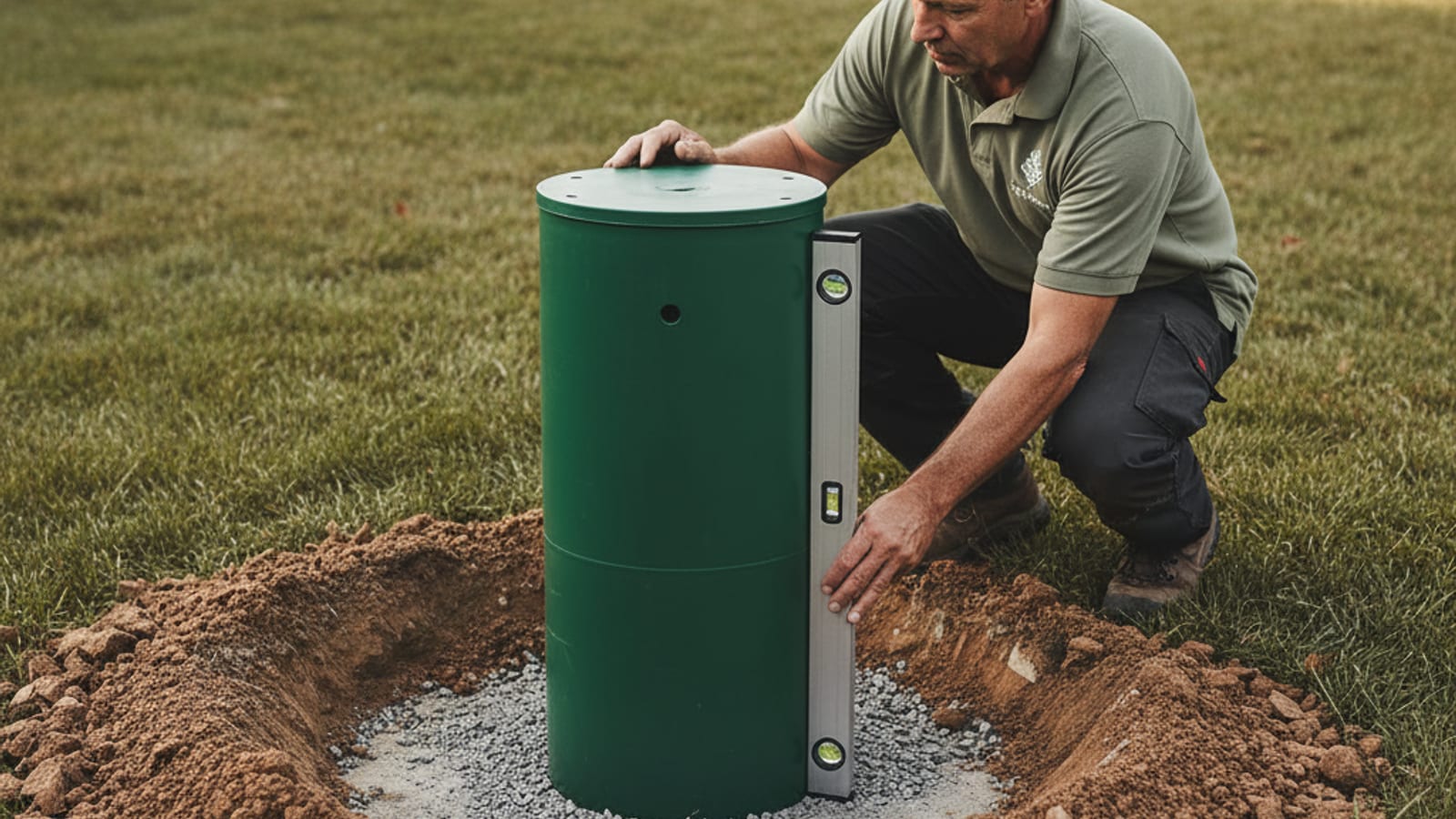
A septic riser is a hollow polyethylene or concrete cylinder that sits on top of the tank’s existing access opening, extending up to grade level. A bolt-down lid sits on top, flush or just above the surrounding ground.
The result: instant lid access. No digging, no probing, no guessing. Lift the lid and the tank is right there.
Why they matter
Three real benefits:
1. Lower service costs forever. Every future pump, inspection, or repair starts with the lid open in 30 seconds instead of an hour of digging. Most service providers will save you $50-$150 per visit. Over 20 years and 5-7 pumps, that’s $250-$1,000 saved.
2. Real safety improvement. Buried, settled, or rotted lids can collapse under foot traffic. Polyethylene risers with bolt-down lids are kid-safe, pet-safe, and code-compliant.
3. Faster emergency response. When a real emergency happens, like a backup or surface overflow, every minute matters. A buried lid can add 30-60 minutes to the response. A riser cuts that to zero.
What they cost
In San Diego County in 2026:
- Single riser install: $325 to $650
- Pair of risers (most residential tanks have two access points): $550 to $1,100
- Standalone job: the high end of those ranges
- Bundled with a routine pump: often $200-$400 less than standalone, since the lids are already open
Concrete risers are available for heavy commercial and driveway-load applications and run higher ($550-$1,200 each). For residential lawn applications, polyethylene is the standard.
How tall do they need to be?
The riser should bring the lid to within 1-2 inches of grade, flush enough to mow over comfortably and high enough to keep surface water and debris out of the tank.
We measure depth at the job and stack riser sections to fit. Most installs need 6 to 18 inches of riser stack.
Will they look ugly?
A common worry that almost never plays out. Polyethylene risers come in green, tan, and black to blend with most yard contexts. The lid sits flush or just above the grass and can be set in mulch, low groundcover, or as a stepping stone in landscaping.
The pros we send have installed thousands of risers and almost no one comes back complaining about visual impact.
Are they required by code?
Not retroactively. SD County DEH requires risers on all new installs to grade, but existing properties with buried lids are encouraged but not forced to upgrade.
That said, real-estate inspections increasingly flag buried lids as a maintenance recommendation. If you’re planning to sell within the next 5-10 years, installing risers now improves your inspection report.
Can I install them myself?
Technically possible, but the gas-tight gasket between the riser and the tank is the part most DIY installs miss, and a bad seal causes settling, water intrusion, and persistent odor over the tank.
The gasket requires:
- A clean, dry mating surface on the tank
- The right gasket type for the tank material
- Proper compression and bedding
- A confirmed seal before backfilling
We do the install in 30-90 minutes per riser, gasket properly seated, lid bolted down, site cleaned up. The labor savings on DIY rarely offset the risk of a bad seal, and a bad seal usually requires re-doing the whole install.
When to add them
The best time to install risers is during a routine pump. The lids are already open, the truck is on site, and the install adds 30-90 minutes per riser at the bundled rate.
The second-best time: ahead of selling. A documented riser install adds value to the inspection report.
The third-best time: as soon as a real-estate inspection flags buried lids in a property you’re keeping.
What about effluent filters while we’re at it?
If we’re already opening the lids to install risers, this is the right moment to retrofit an effluent filter (if your tank doesn’t have one). $125-$200 added, and the filter prevents drain field damage that costs $8,000-$25,000 to repair.
Bundled together (pump, risers, effluent filter), typical project cost runs $850-$1,800. A genuinely high-ROI bundle for any older tank.
Schedule
Tank Pro SD sends pros who install polyethylene and concrete risers across San Diego County, bundled with routine pumping or as standalone jobs. (858) 925-5546.